
Klem
Designing an onboarding flow to drive activation & value
Project overview
Klem is a SaaS application that helps companies manage employee absences and recover IJSS (daily sickness benefits) from the French social security system.
The product relies on DSN (Déclaration Sociale Nominative) files to retrieve employee data and calculate potential recovery amounts.
Without DSN, the product cannot deliver any value.
My role
Product Designer (UX & UI)
Context
Internal SaaS product
Focus
UX strategy, onboarding, activation, interaction design
The problem
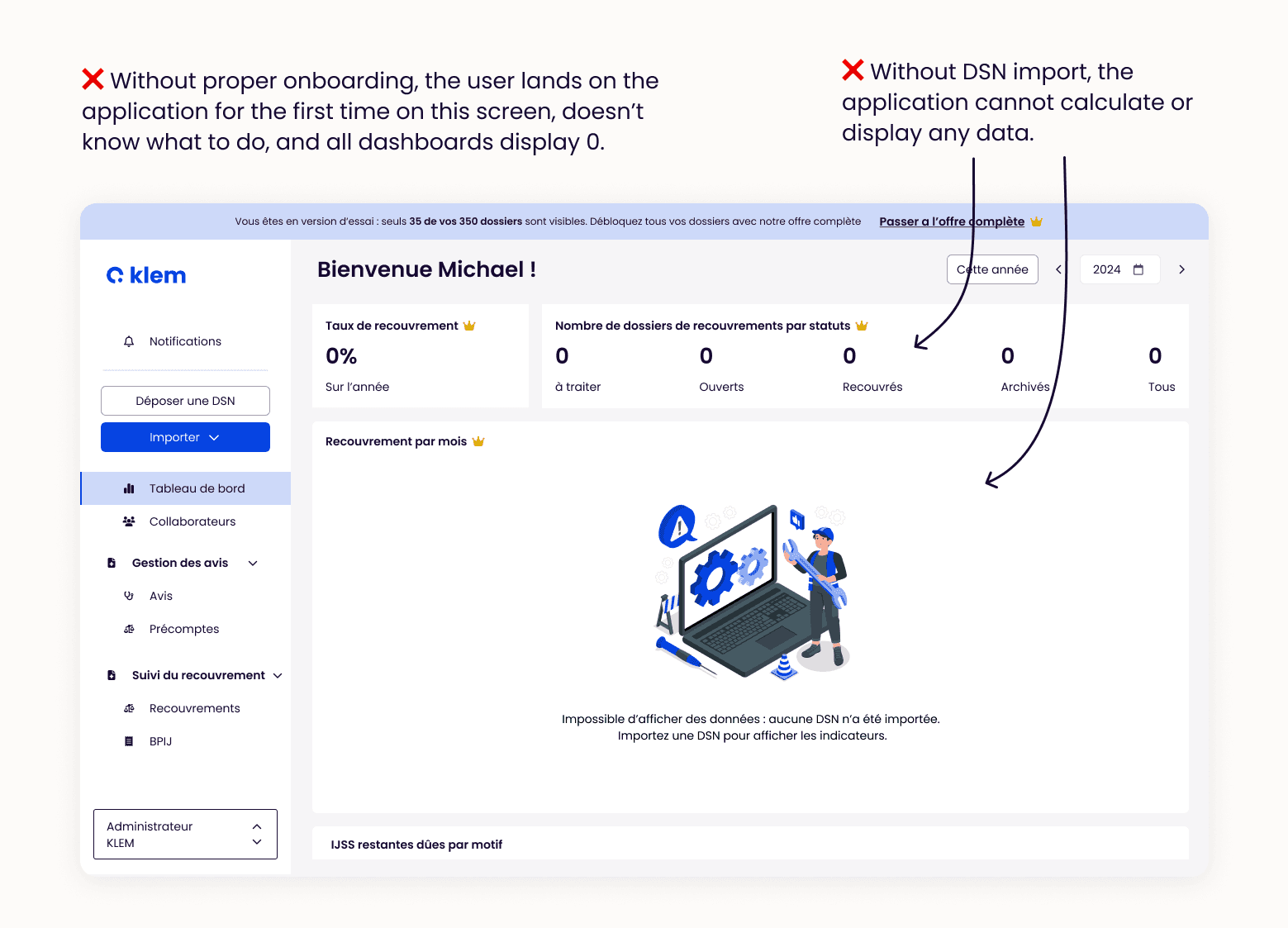
After creating an account, users were immediately redirected into the application — without any onboarding or guidance.

As a result:
Users didn’t know what to do first
Empty dashboards created confusion on first use
The interface felt complex and overwhelming
Klem’s core value wasn’t visible early on
Users could create an account without ever reaching Klem’s core value, directly impacting activation and adoption.
Research & UX auditing
Before designing the onboarding flow, I focused on understanding why users were struggling during their first interaction with Klem.
Since no onboarding existed, the audit focused on the first-time experience after account creation.
Existing flow analysis
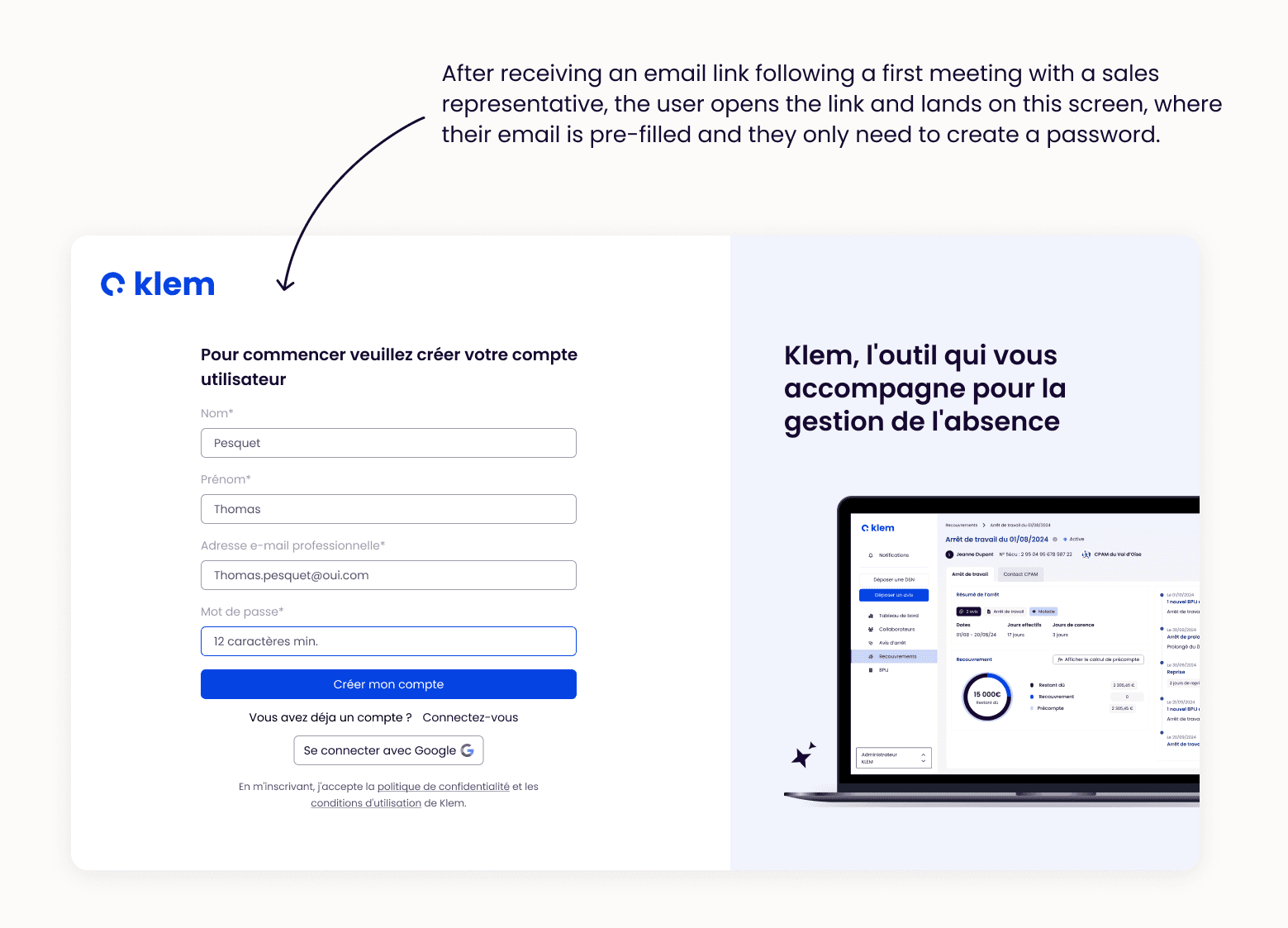
After receiving an invitation email, users:
Created their account
Were redirected directly into the app
Landed on empty dashboards without guidance
Without DSN import or Net-Entreprises connection, the interface provided no value or direction.
Internal insights (Sales & Support)
Key insights came from recurring feedback shared by Sales and Support teams:
Users didn’t understand what to do after signing up
DSN import was often skipped or misunderstood
Support teams spent time explaining basic setup steps
Manual assistance was required to activate accounts
This became a critical issue with the long-term goal of opening the product to self-serve trial users, without human onboarding.
Competitive exploration
I reviewed onboarding flows from other B2B SaaS products to understand how they guide users through complex setup steps.
This highlighted the importance of:
Step-by-step configuration
Clear framing of mandatory actions
Early exposure to product value
Key research takeaways
Dropping users directly into the app created confusion
Mandatory steps needed clear explanation
Users needed to see value before completing complex setup
Onboarding had to support both Sales-led and self-serve usage
These insights directly shaped the onboarding strategy.
Design goals
The goal was to design an onboarding experience that improves user understanding while supporting Klem’s activation and growth objectives.
Guides users before entering the app
Makes DSN import unavoidable but understandable
Reduces complexity by breaking the setup into steps
Shows Klem’s value as early as possible
Improves activation and time-to-value

UX strategy
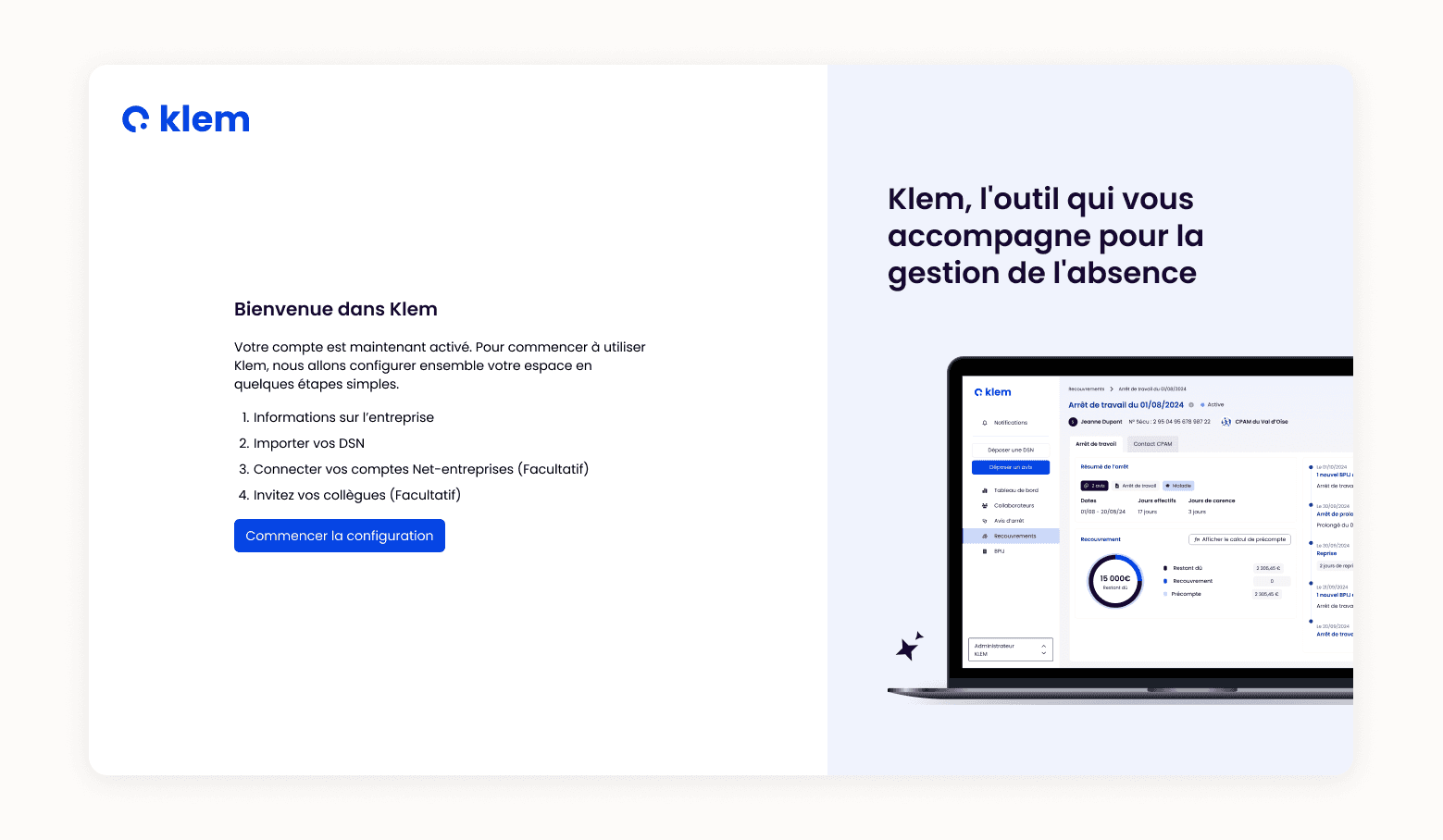
Instead of dropping users directly into the product, I designed a guided onboarding tunnel displayed after account creation and before first access to the app.
This onboarding acts as a bridge between:
“I just created an account”
and
“I understand what Klem does and why it matters”
The flow is linear, progressive, and focused on one task at a time.
Design system foundations
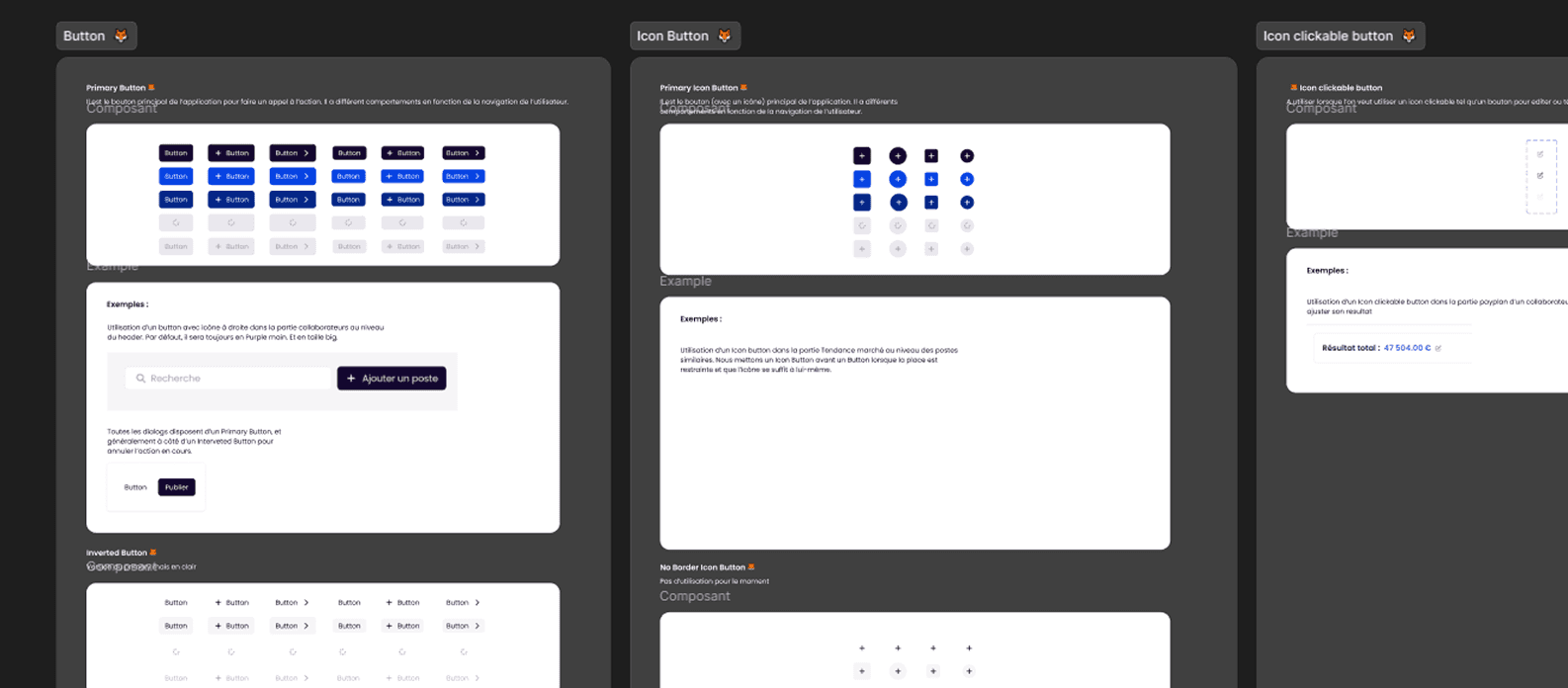
To support the onboarding flow and ensure consistency across the product, I worked within Klem’s existing design system and contributed to its evolution.
The goal was to create scalable components that could support complex workflows while remaining clear and easy to use.
Design flow
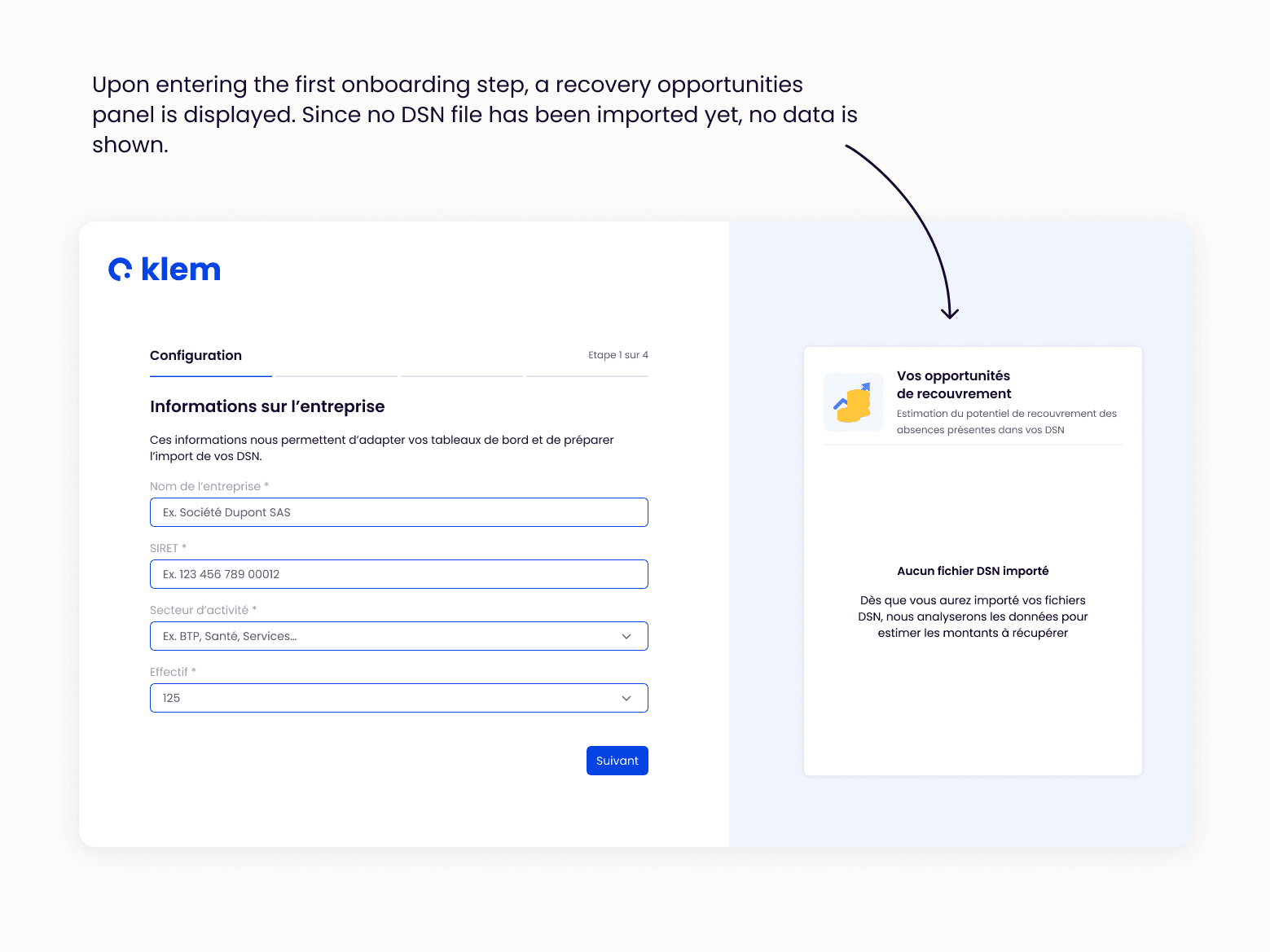
Step 1 — Company information
The first step collects essential company data.
Why this step first
Simple and non-threatening
Helps users get started smoothly
Provides necessary context for DSN processing
This step eases users into the product without overwhelming them.
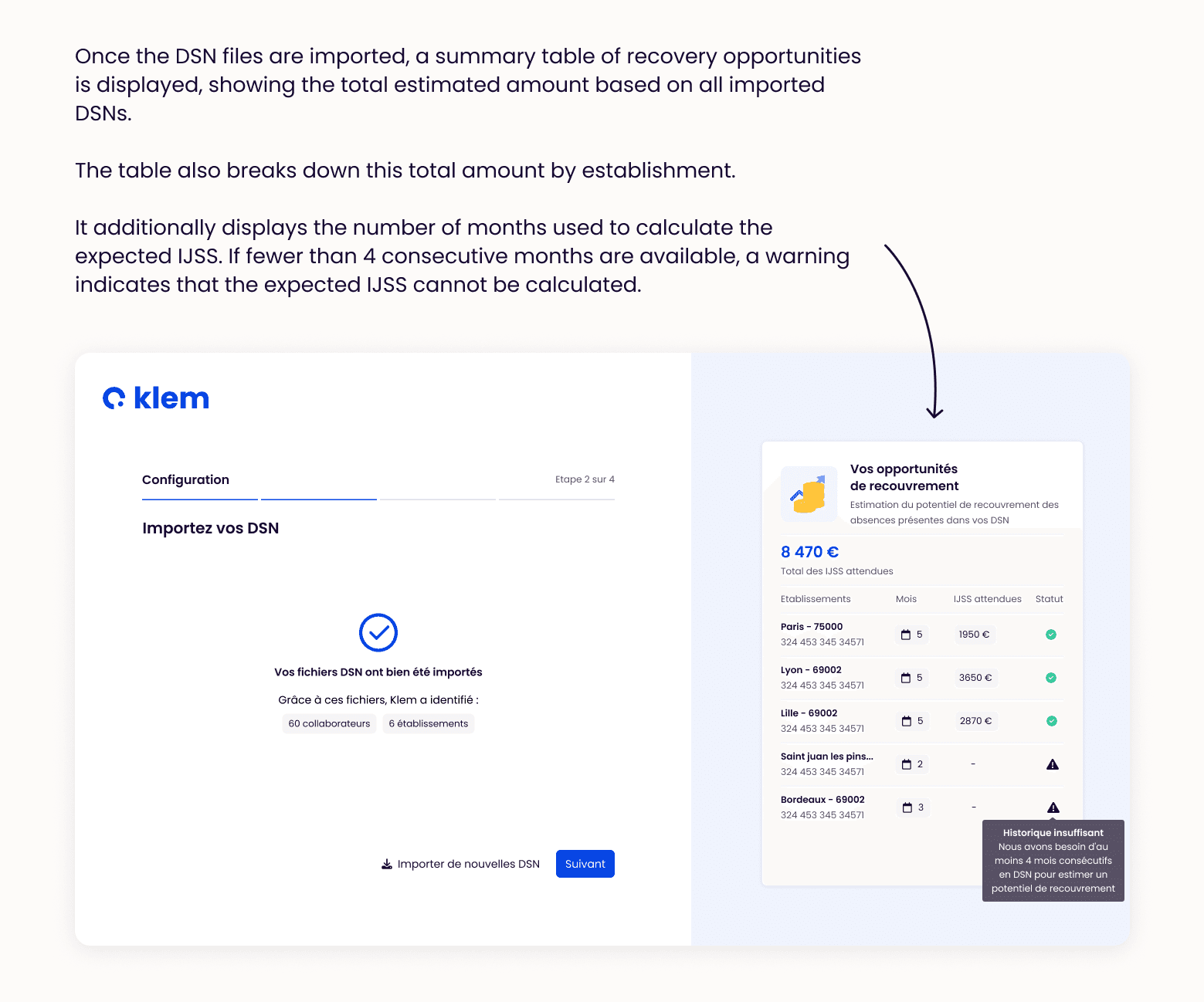
Step 2 — DSN import (core step)
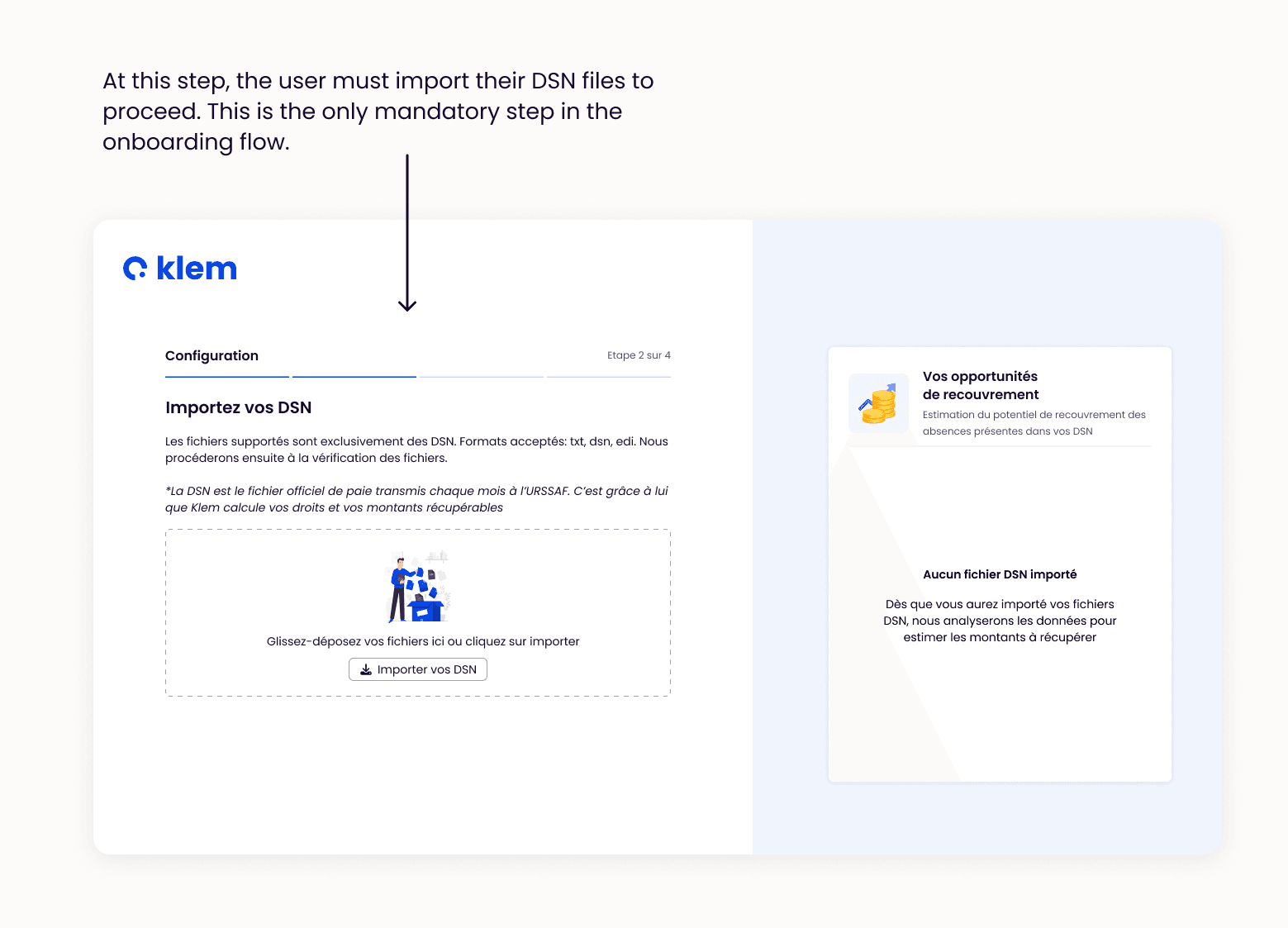
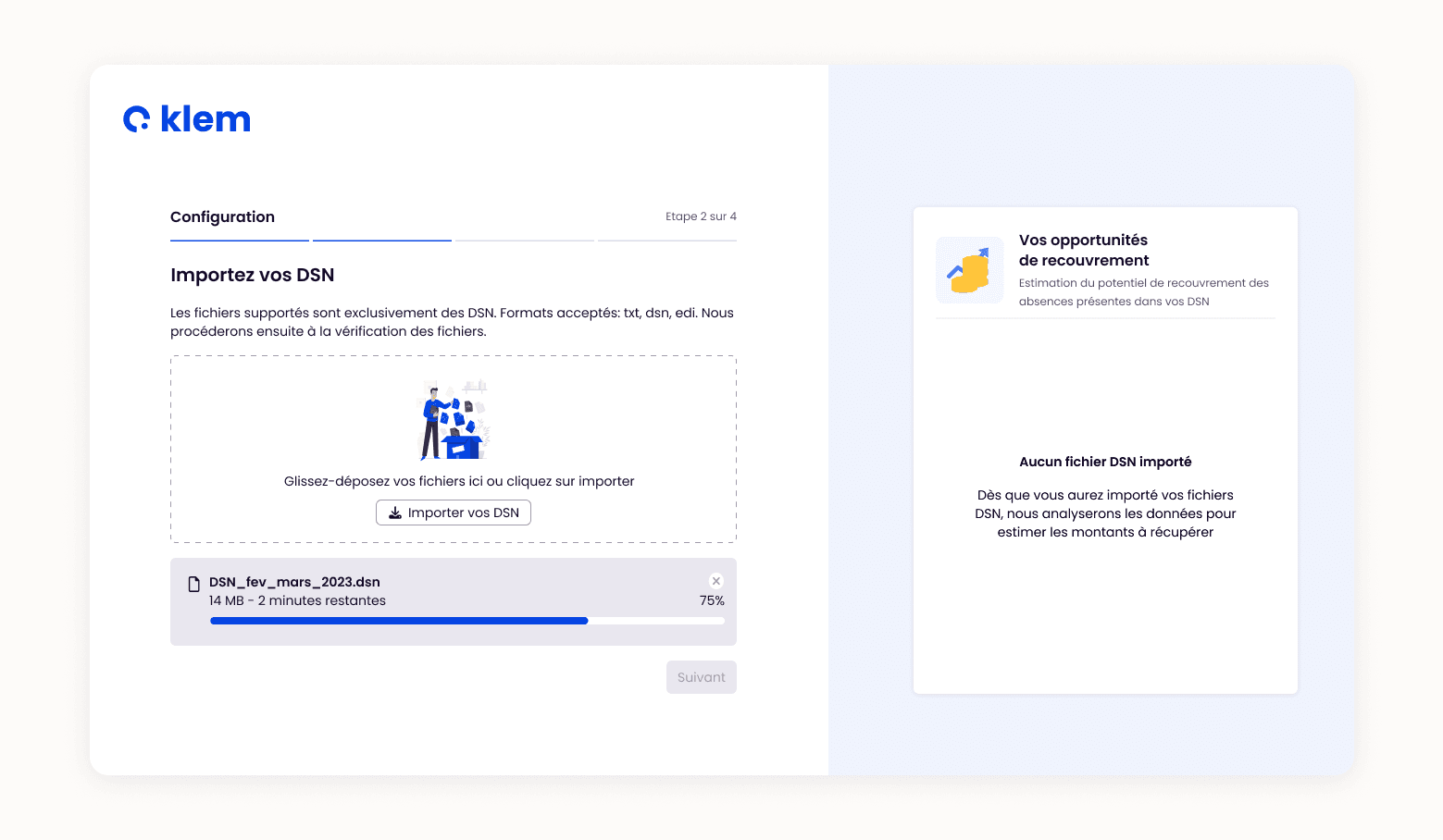
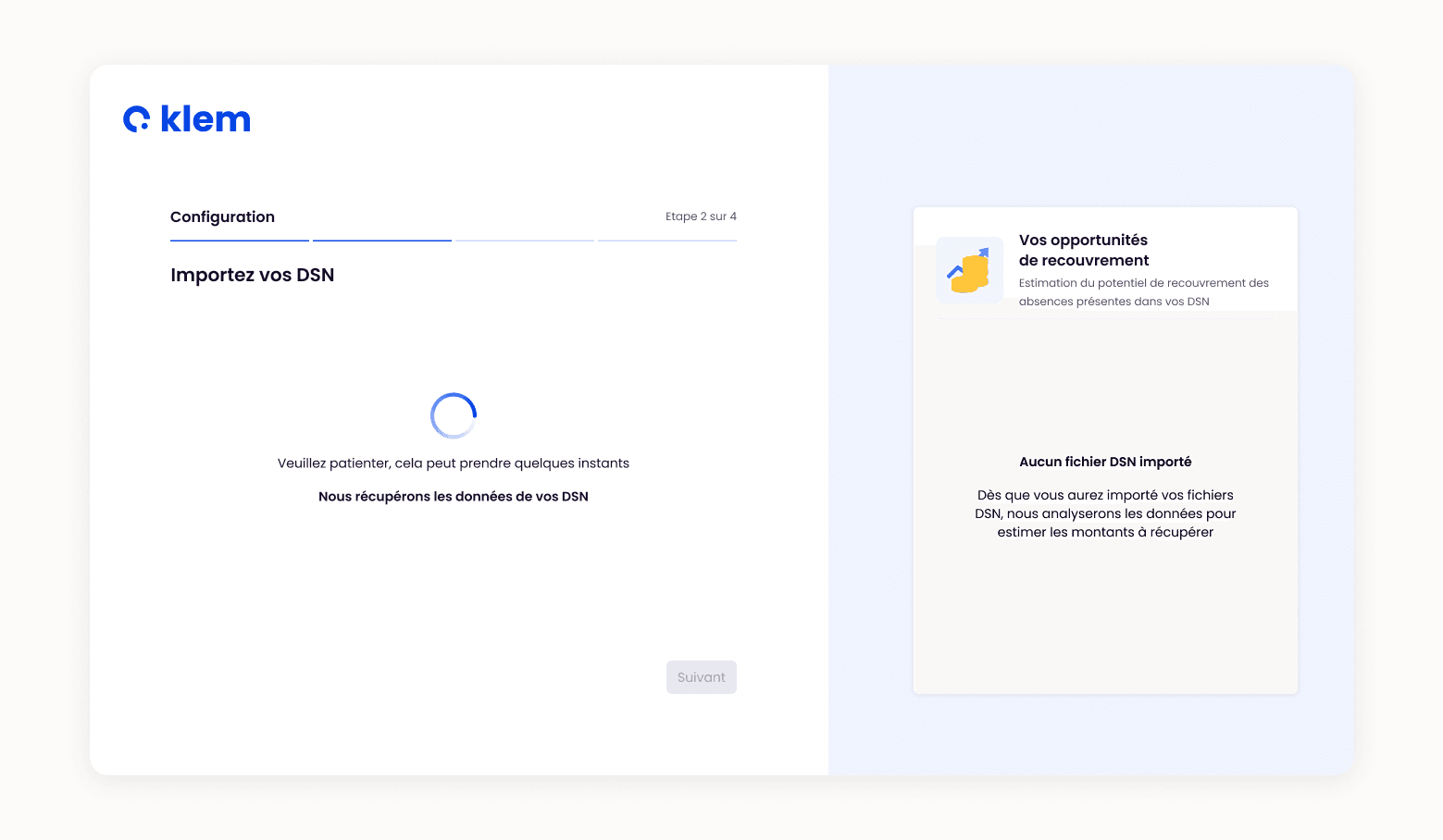
This is the most important and non-optional step of the onboarding.
Users must import one or more DSN files to continue.
Key product decision
During early iterations, this step was purely functional.
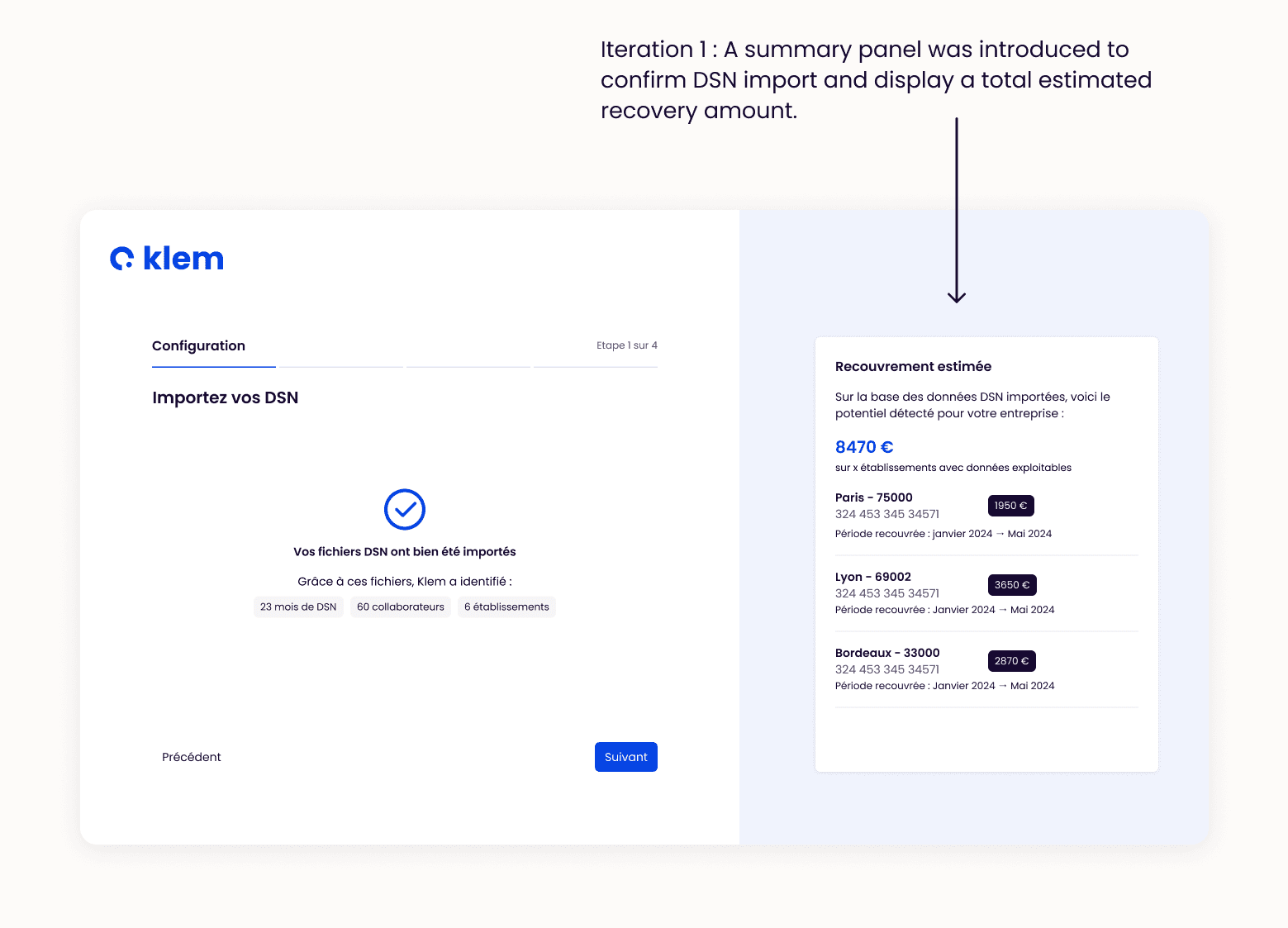
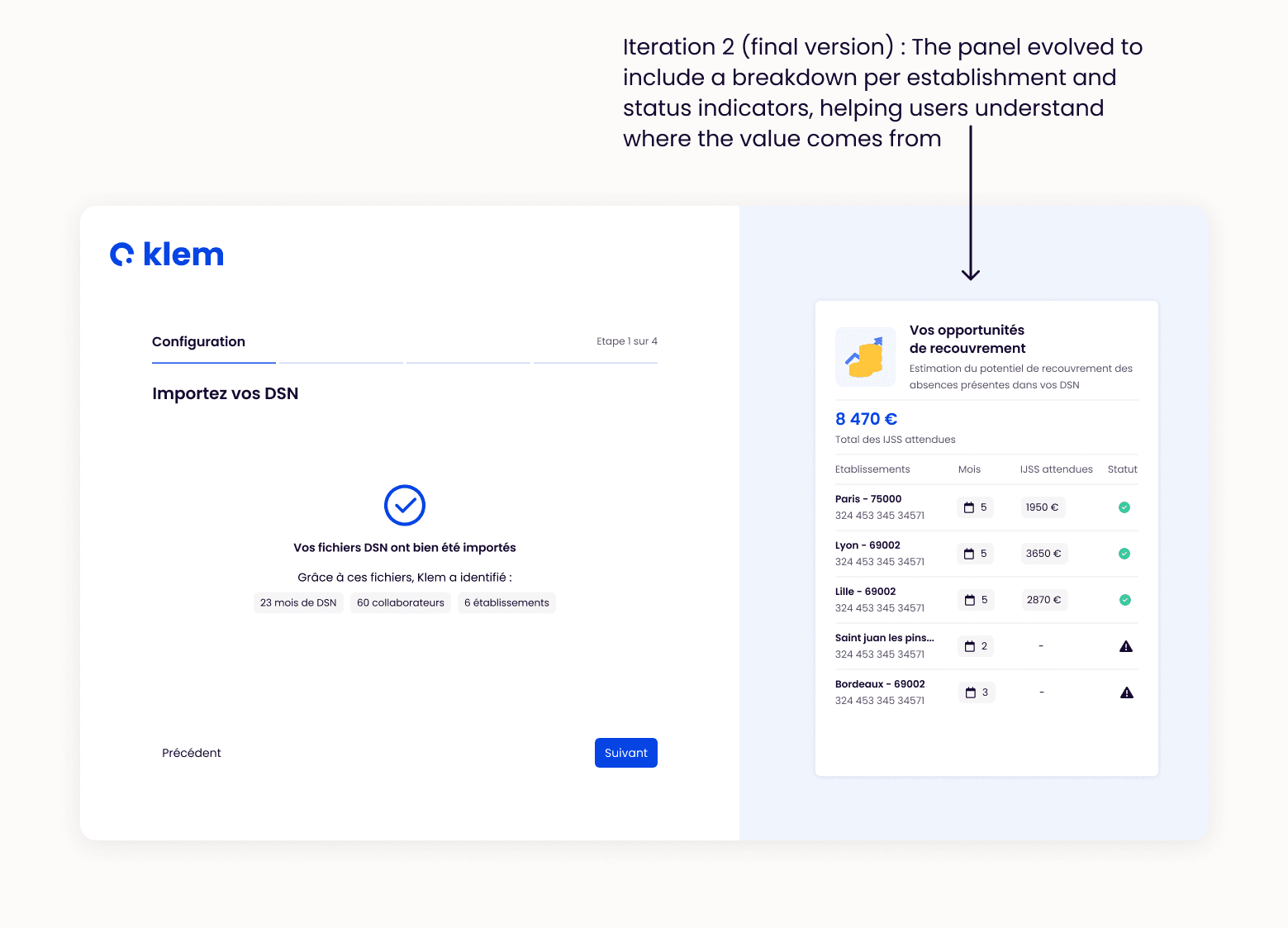
I proposed adding a real-time summary table of recovery opportunities displaying:
Estimated recovery amounts
Breakdown per establishment
Data calculated directly from imported DSNs
Why this mattered
Creates an emotional trigger
Makes the product’s value tangible early
Encourages users to complete the onboarding
Transforms a technical constraint into motivation
Users can now immediately see what Klem can bring them — financially — before even entering the app.
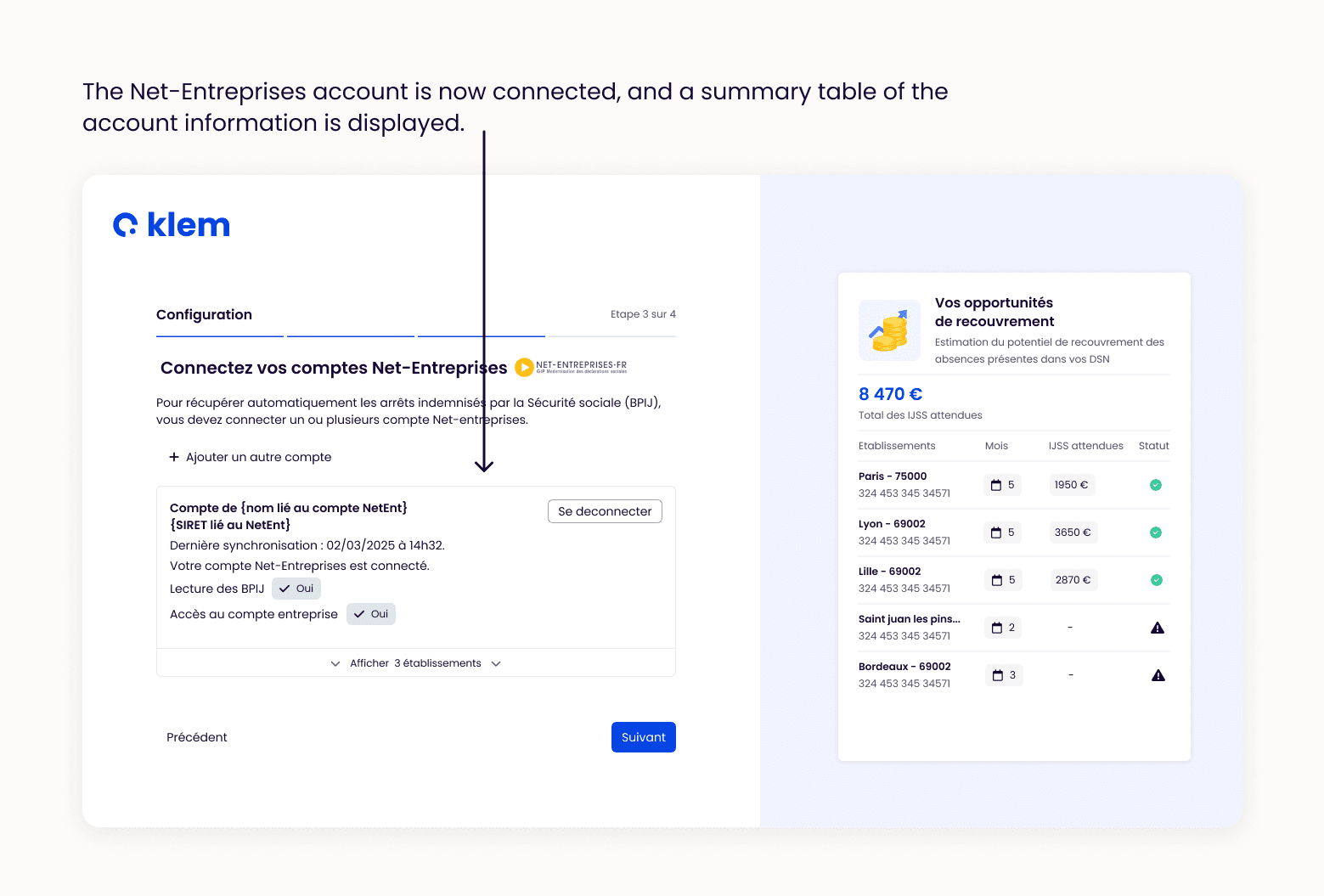
Step 3 — Net-Entreprises connection
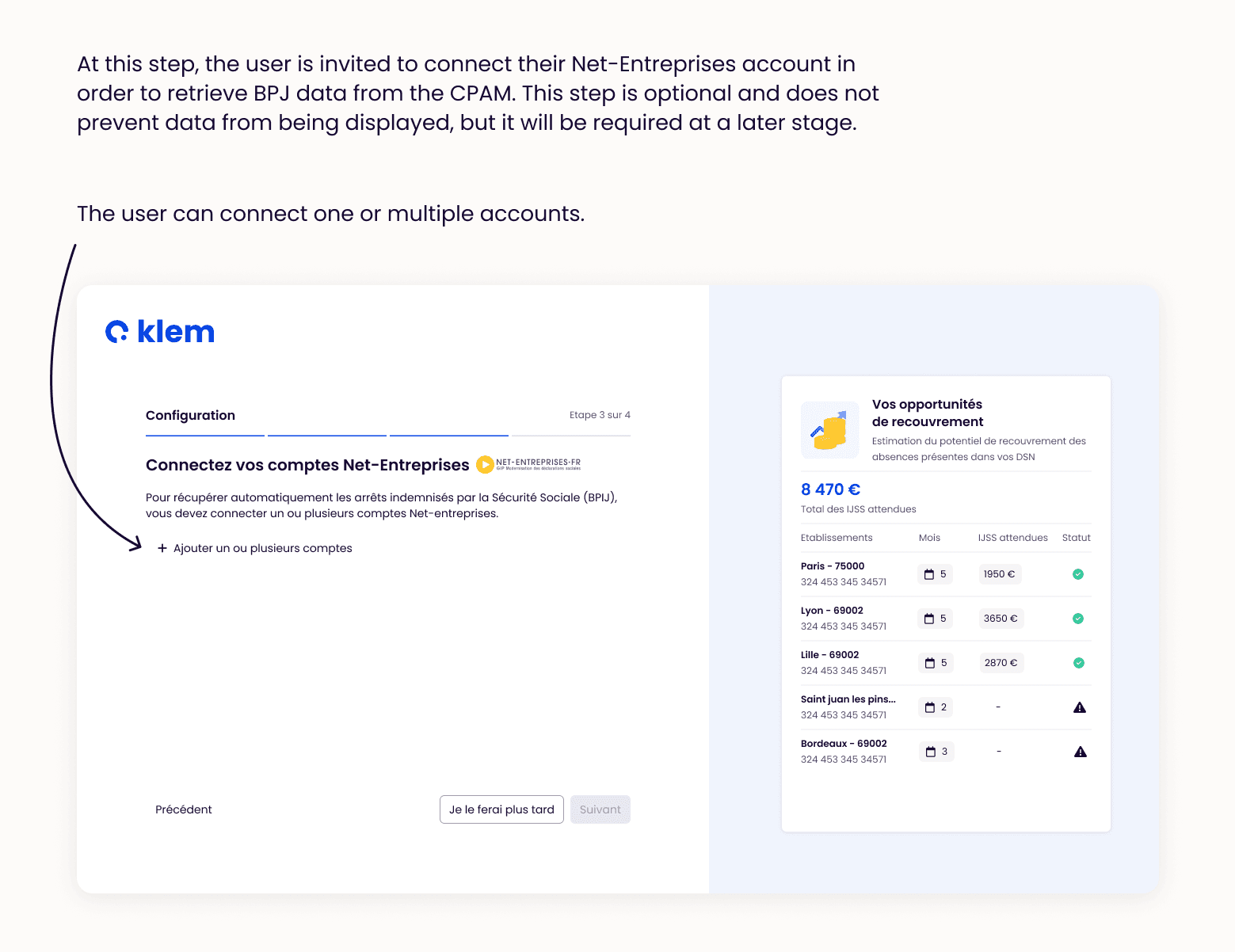
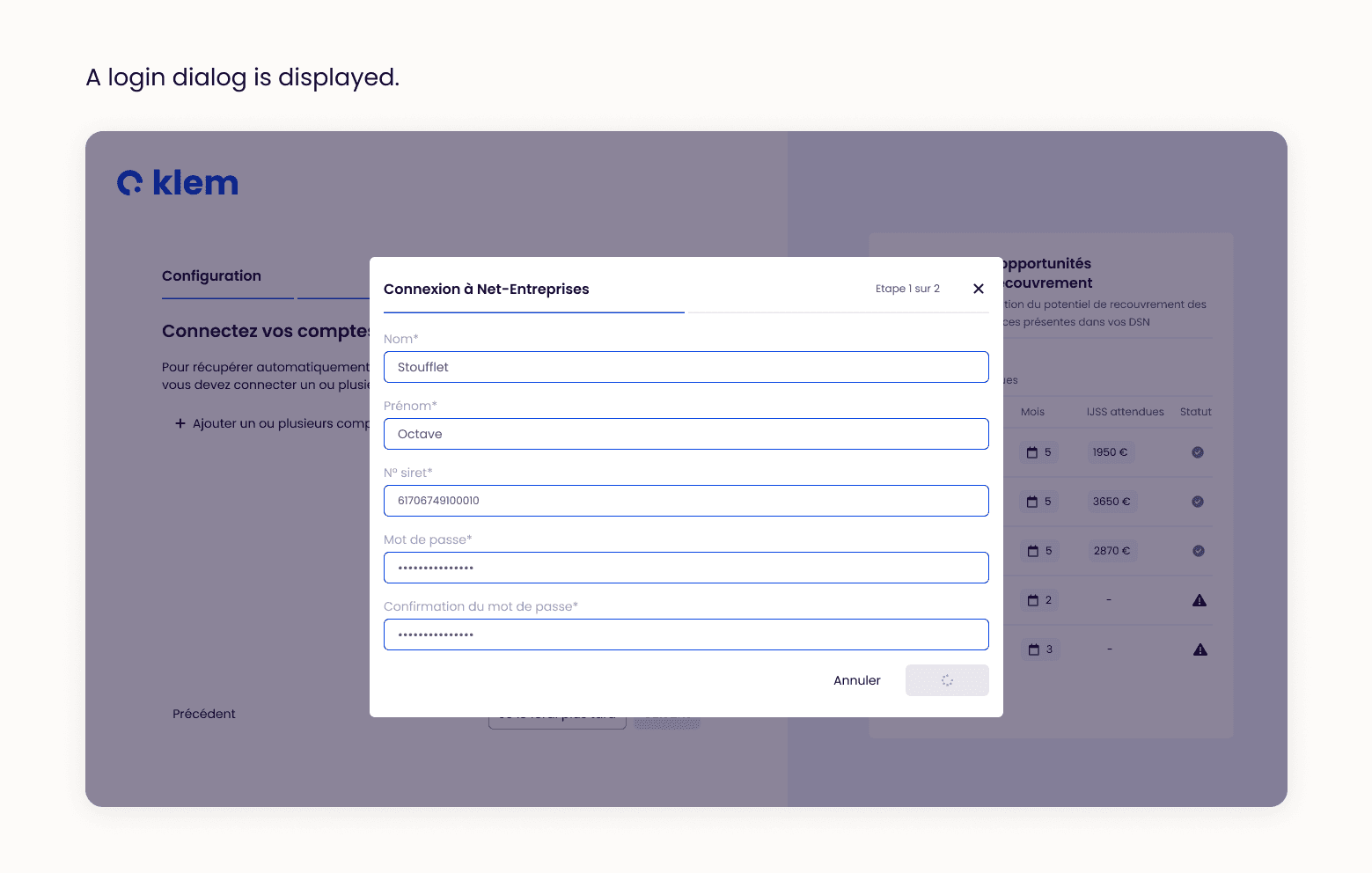
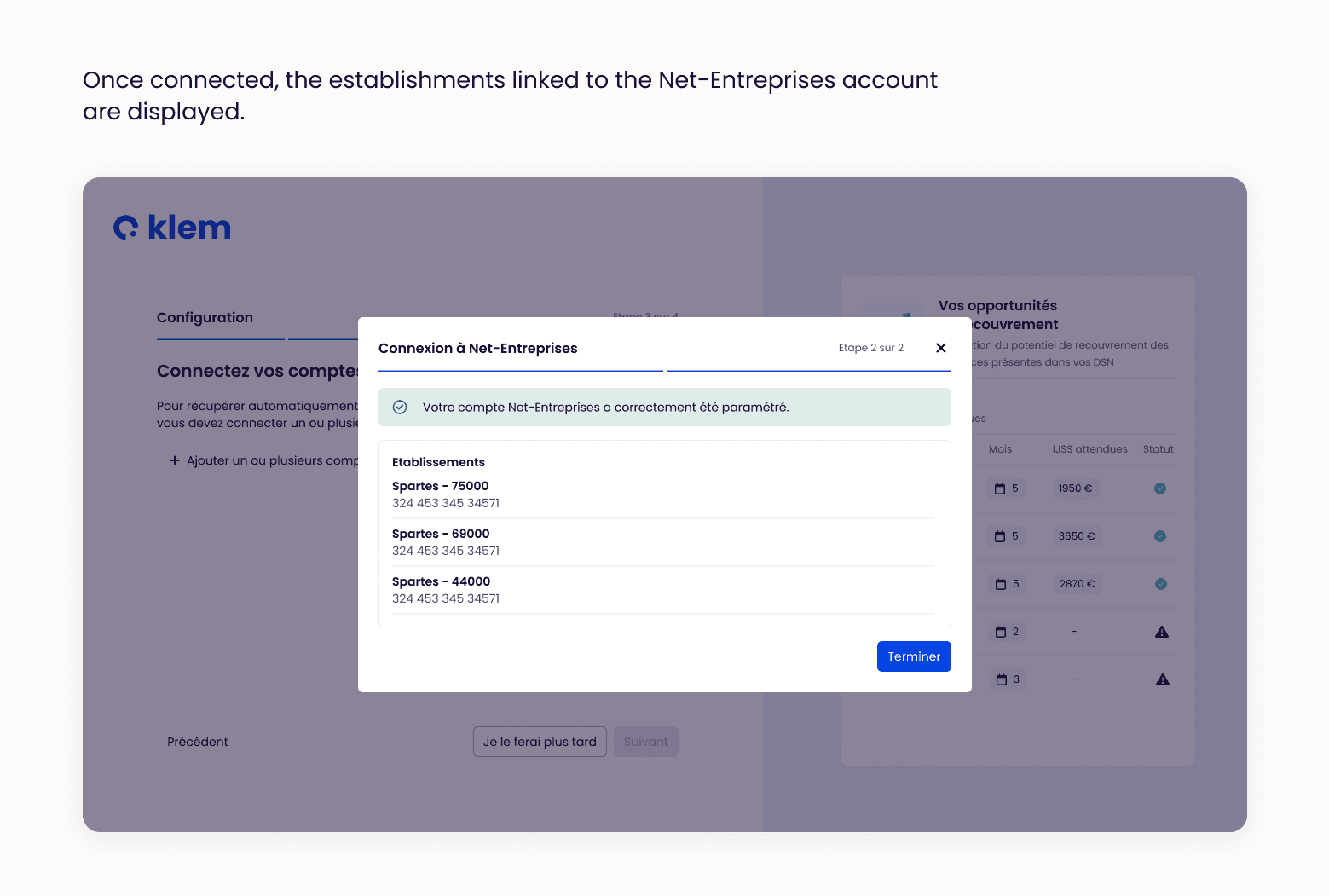
This step allows users to connect their Net-Entreprises account to automatically retrieve required data for IJSS calculation.
UX focus
Clear explanation of why the connection is needed
Reassurance around data usage
Possibility to skip and complete later
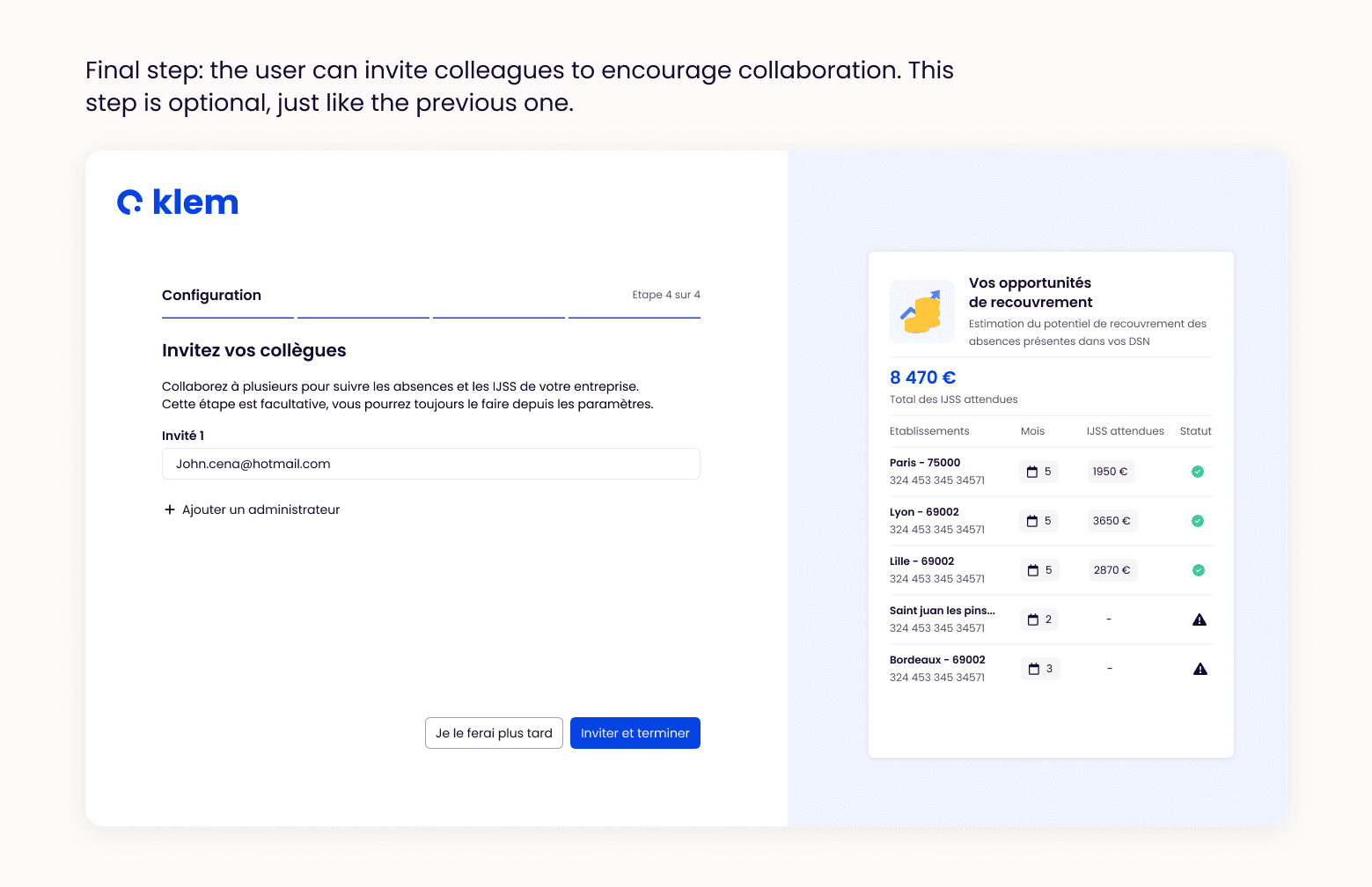
Step 4 — Invite collaborators
The final step invites colleagues to join the workspace.
This step:
Encourages early collaboration
Helps internal adoption
Remains optional to avoid blocking progress
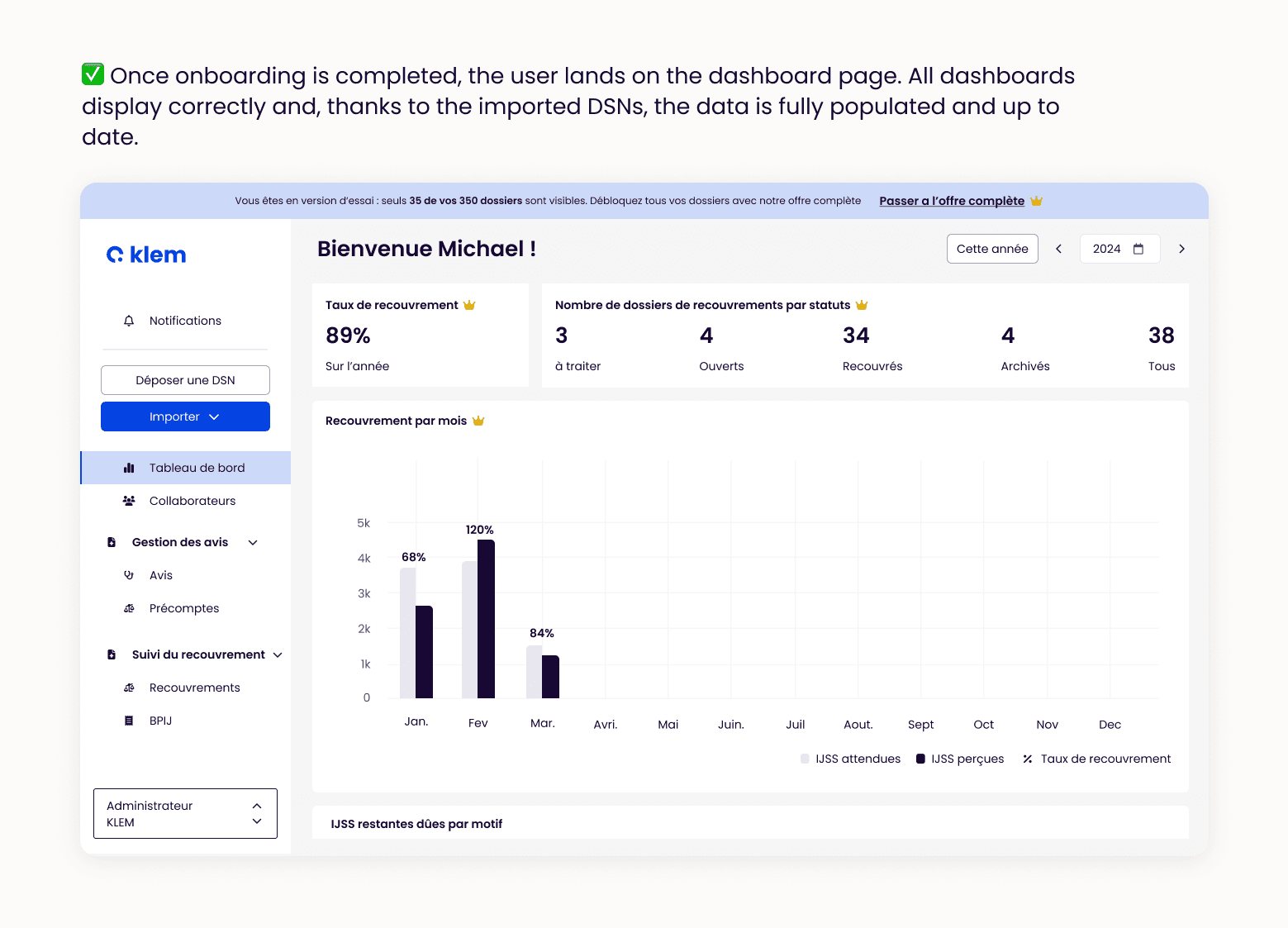
End of the tunnel — Entering the app
Once the onboarding is completed, users access the main application.
At this point:
The product is fully configured
DSNs are already imported
Value is visible
Users understand what to do next
The transition into the app feels intentional rather than abrupt.
Iterations & trade-offs
The onboarding flow went through several iterations to balance clarity, motivation, and product constraints.
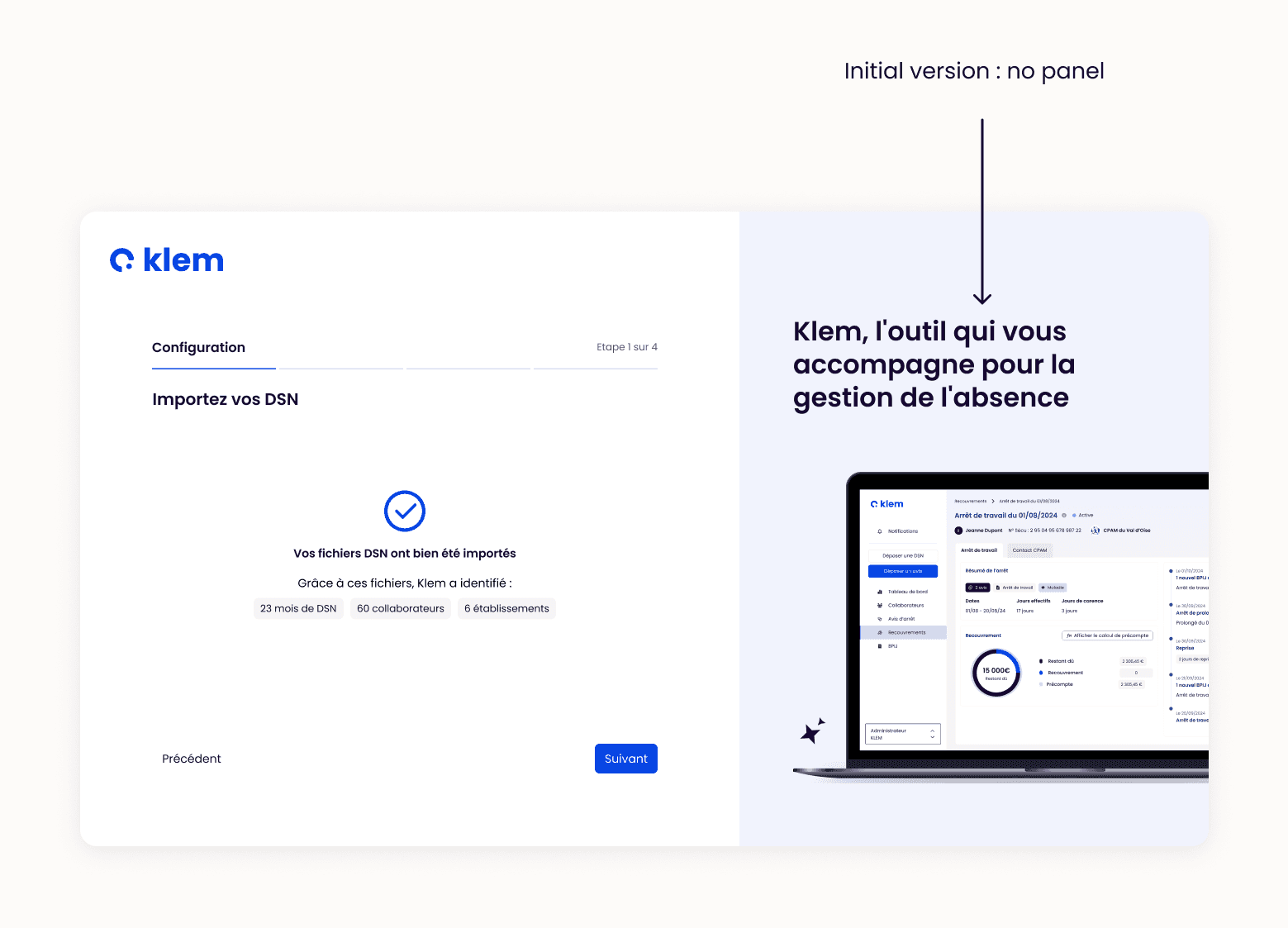
Showing value during onboarding
Initial version
The right-side panel was static and purely visual, providing no insight into Klem’s value.
Iteration 1
A summary panel was introduced to confirm DSN import.
Iteration 2 (final)
The panel evolved to include a breakdown per establishment and status indicators.
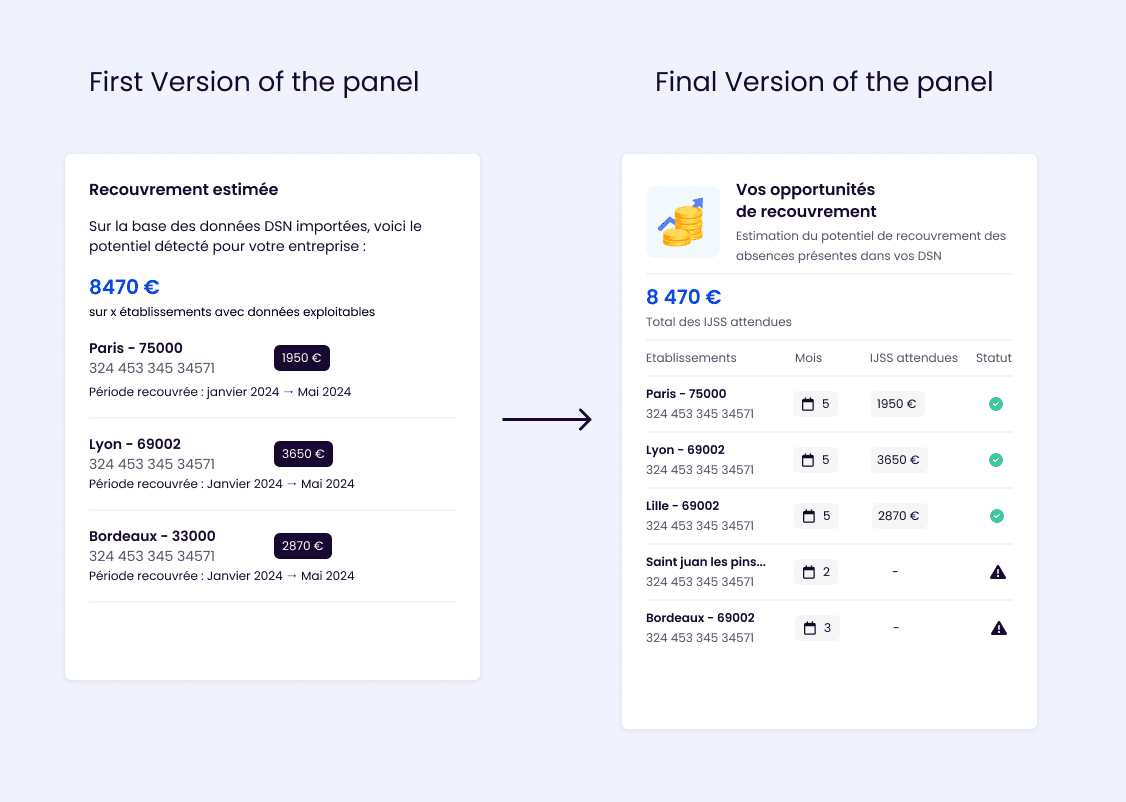
Trade-off
Each iteration increased visual density, but significantly improved trust, clarity, and motivation by making value visible early.
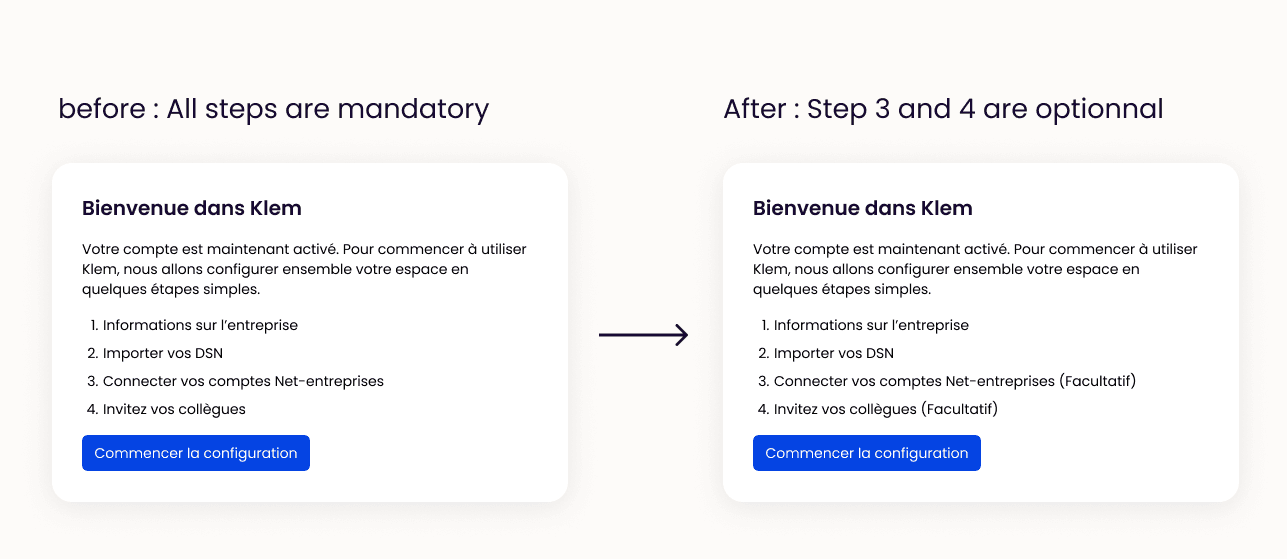
Optional vs mandatory steps
DSN import remained mandatory, while other steps — Net-Entreprises connection and inviting collaborators — were made optional to reduce friction during first use.
Removing an onboarding step
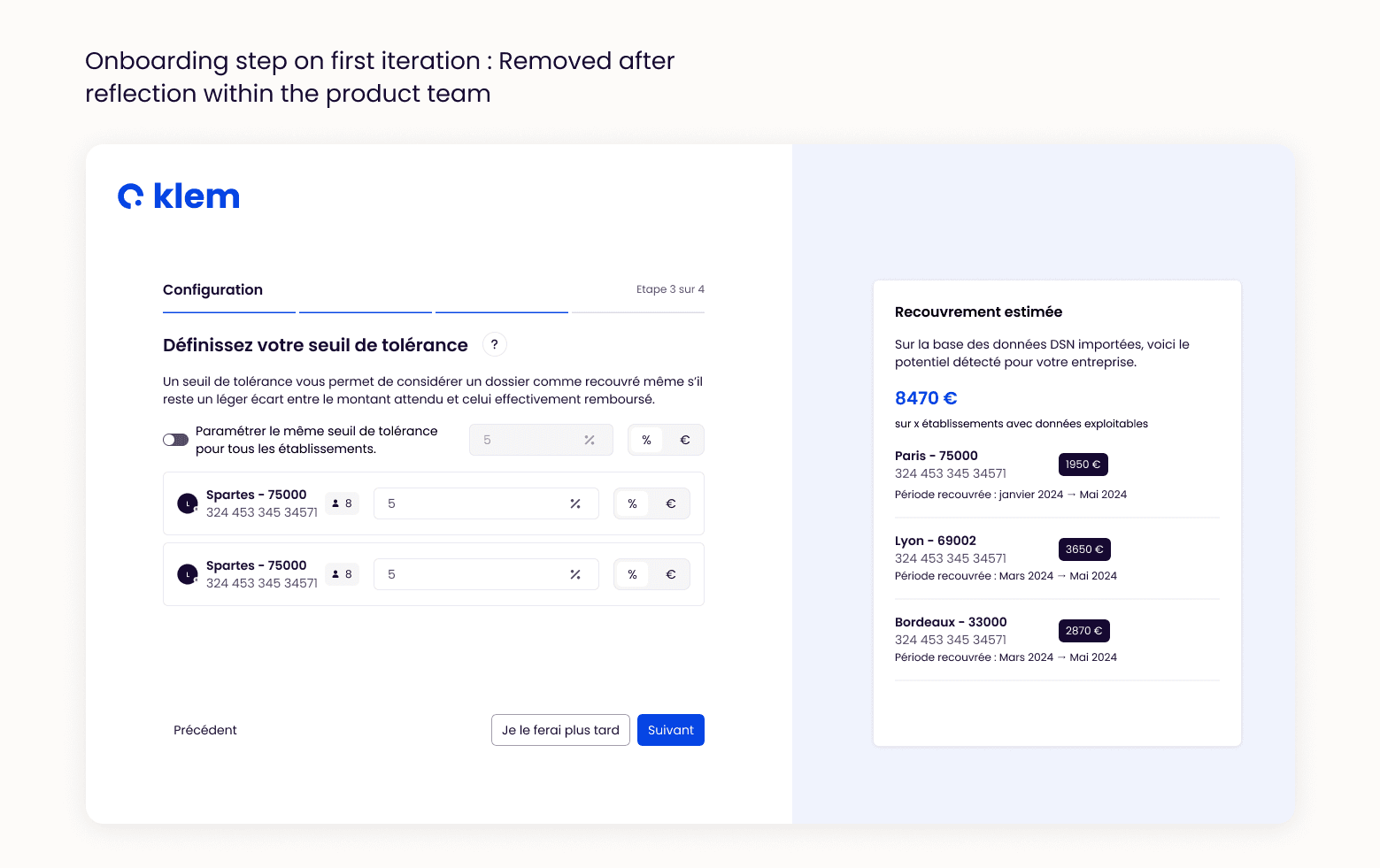
An early step asking users to define a recovery tolerance threshold was removed and replaced with a default value.This reduced cognitive load and allowed users to reach value faster.
Impact & learnings
Impact
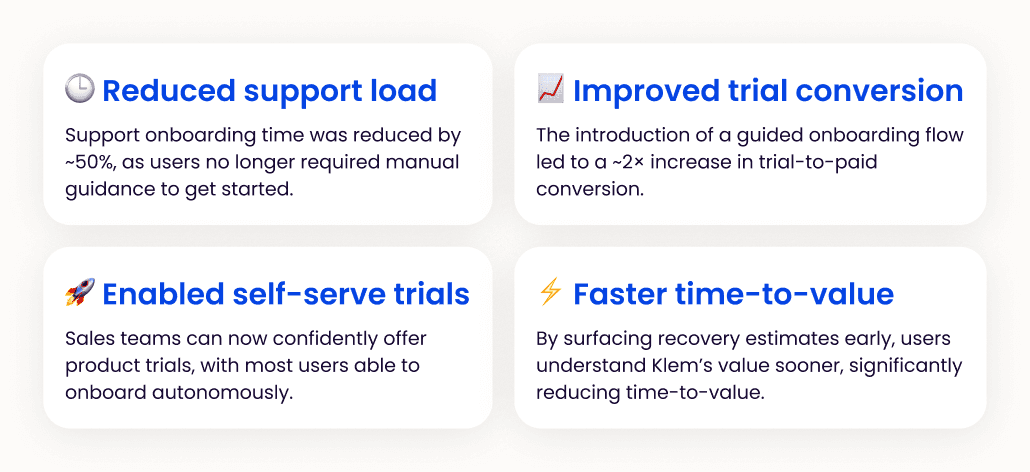
This onboarding redesign improved the first-time experience by guiding users toward Klem’s core value from their very first interaction.
Key learnings
Onboarding is a product and business lever, not just a UX task
Mandatory actions should be explained, not hidden
Early value exposure increases engagement and completion
Iteration and trade-offs are essential to reach clarity
Small UI decisions can have a large impact on activation
Final reflection
This project reinforced the importance of designing onboarding as a value-driven activation experience, not a technical checklist.
By aligning user needs, product constraints, and business goals, onboarding becomes a key moment that helps users understand, trust, and adopt the product faster.