Designing data import and job matching workflows
Project overview
Ferway is a compensation management platform that helps companies make data-driven salary decisions through market benchmarks, internal salary analysis, and variable compensation management.
To deliver accurate and actionable insights, Ferway relies on large volumes of HR data coming from sources such as DSN imports or manual employee inputs.
However, raw data alone doesn’t create value — it must be correctly imported, structured, and aligned with Ferway’s job and market models.
This case study presents two complementary initiatives focused on data activation:
improving the DSN import flow for salary analysis, and designing a job-matching experience to ensure data consistency and reliable market comparisons at scale.
My role
Product Designer (UX & UI)
Context
Internal SaaS product (B2B, HR & Compensation)
Focus
Data onboarding, complex workflows, product iteration, interaction design
Project 1 — DSN import flow
Problem
Ferway allows users to analyze salaries either by manually creating employee profiles or by importing data in bulk.
While the manual approach is possible, it quickly becomes time-consuming and inefficient as teams grow.
To address this, Ferway introduced DSN imports as a faster way to retrieve employee data automatically — creating employee profiles, positions, and salary-related information in seconds instead of hours.
The challenge was therefore to design a clear and reliable DSN import flow that would encourage adoption while handling complex file formats and validations.
Solution — First version (V1)
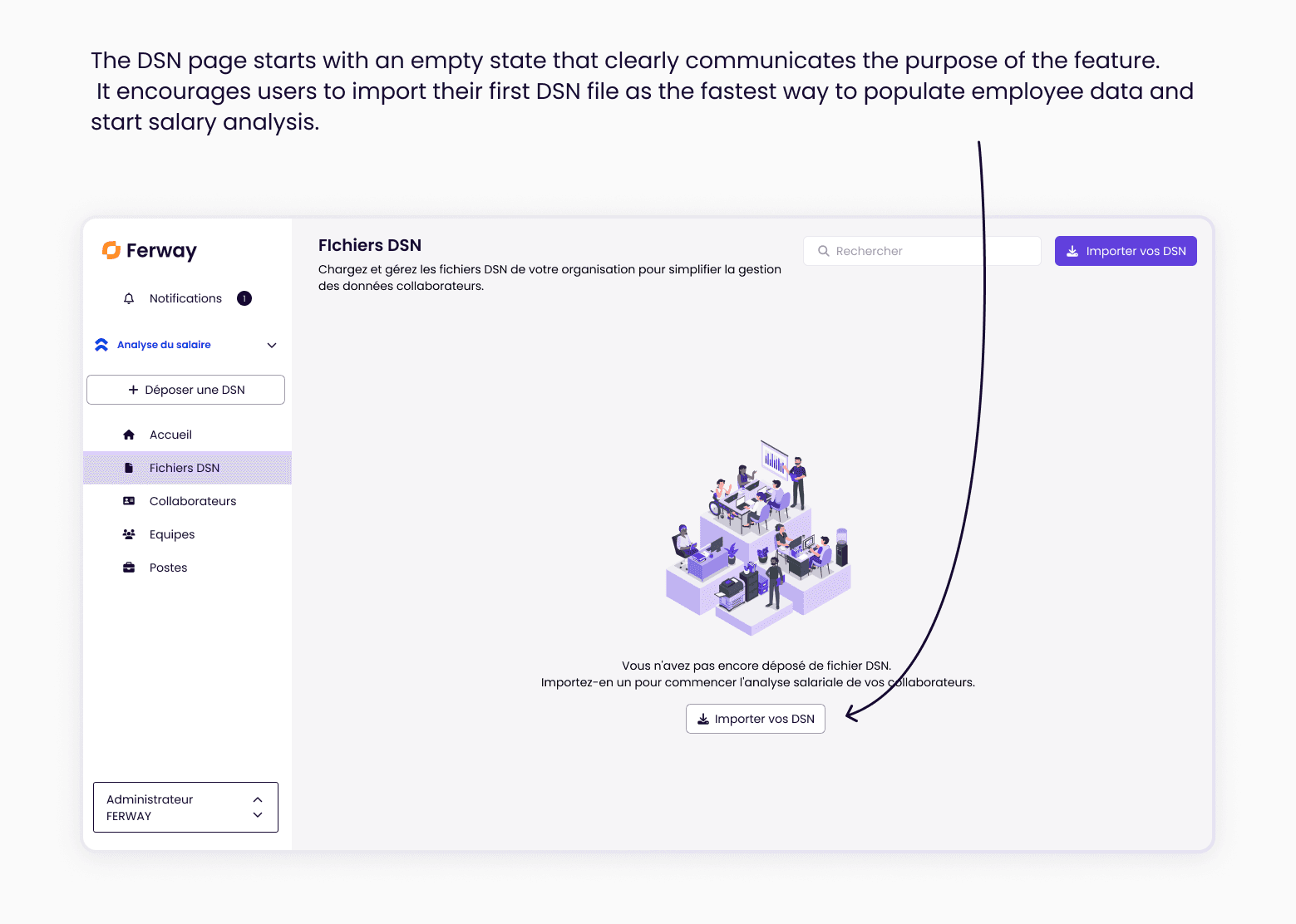
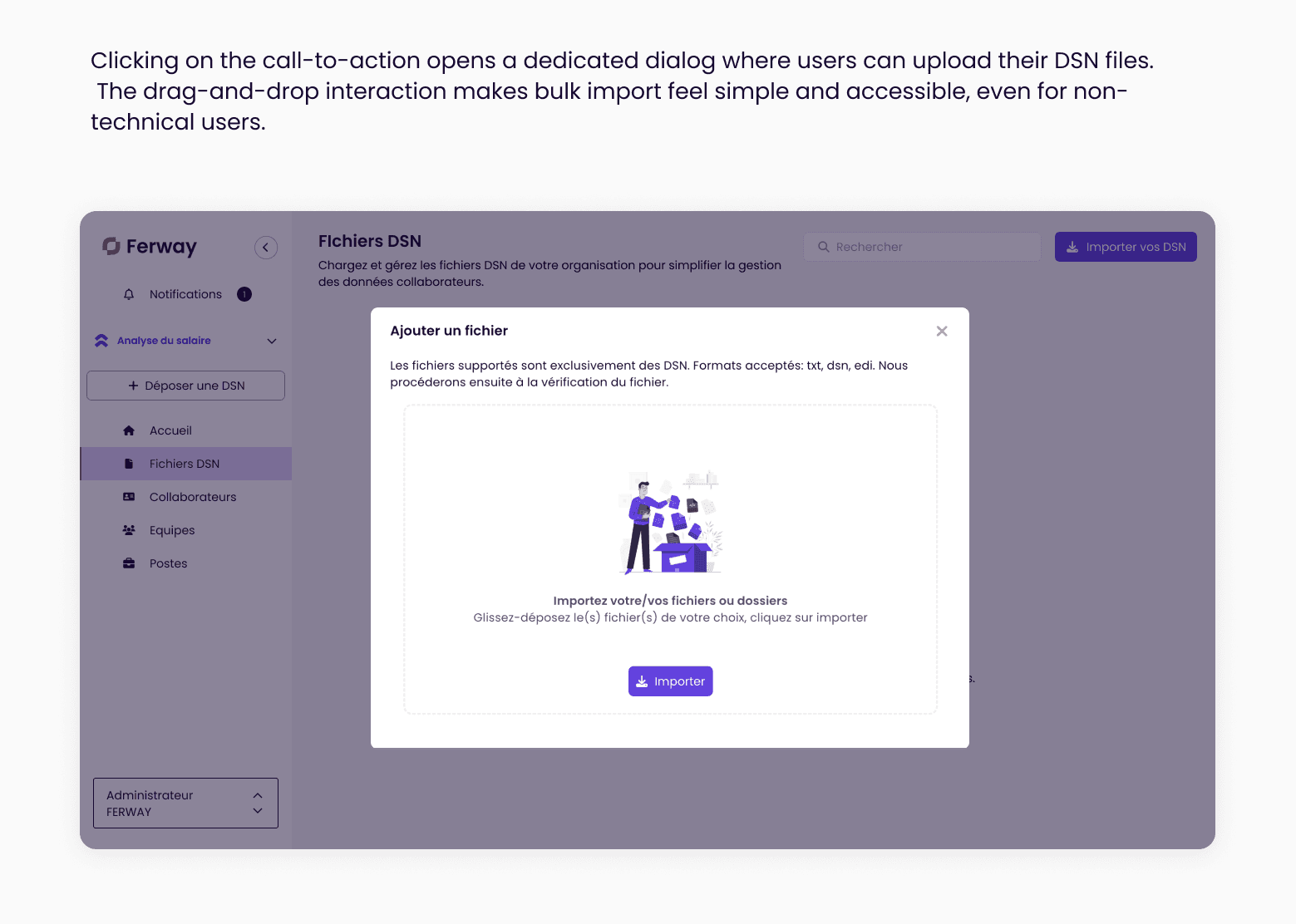
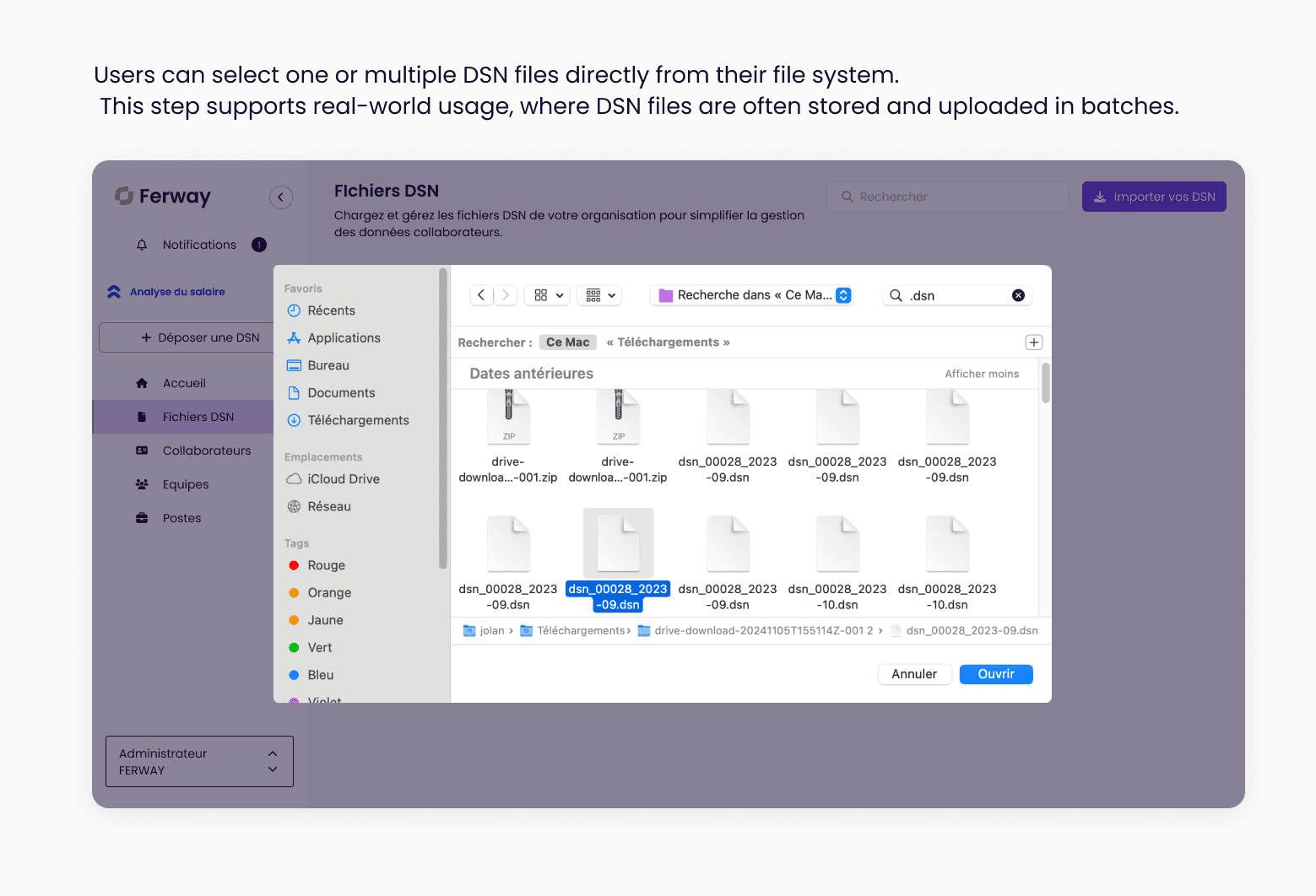
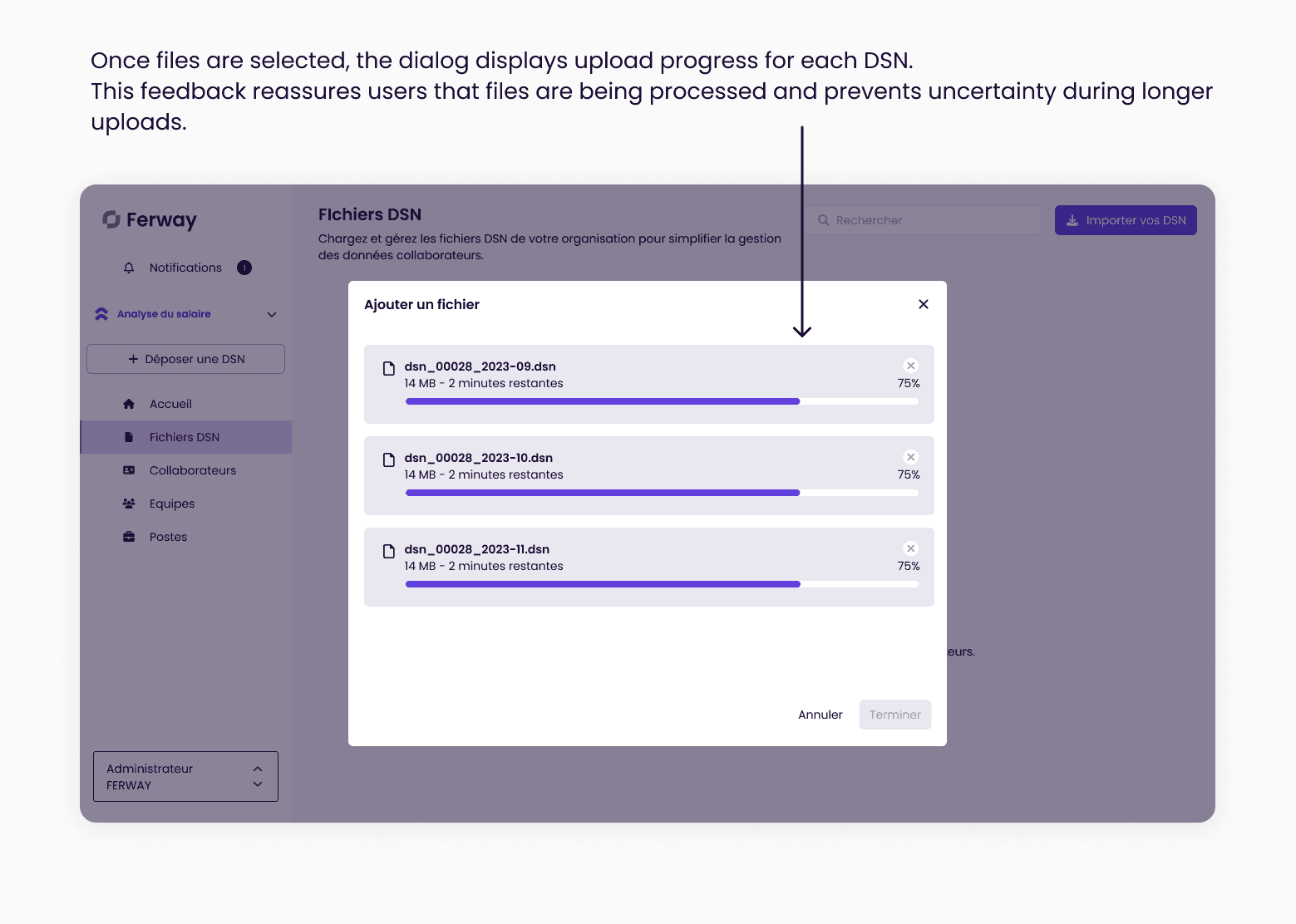
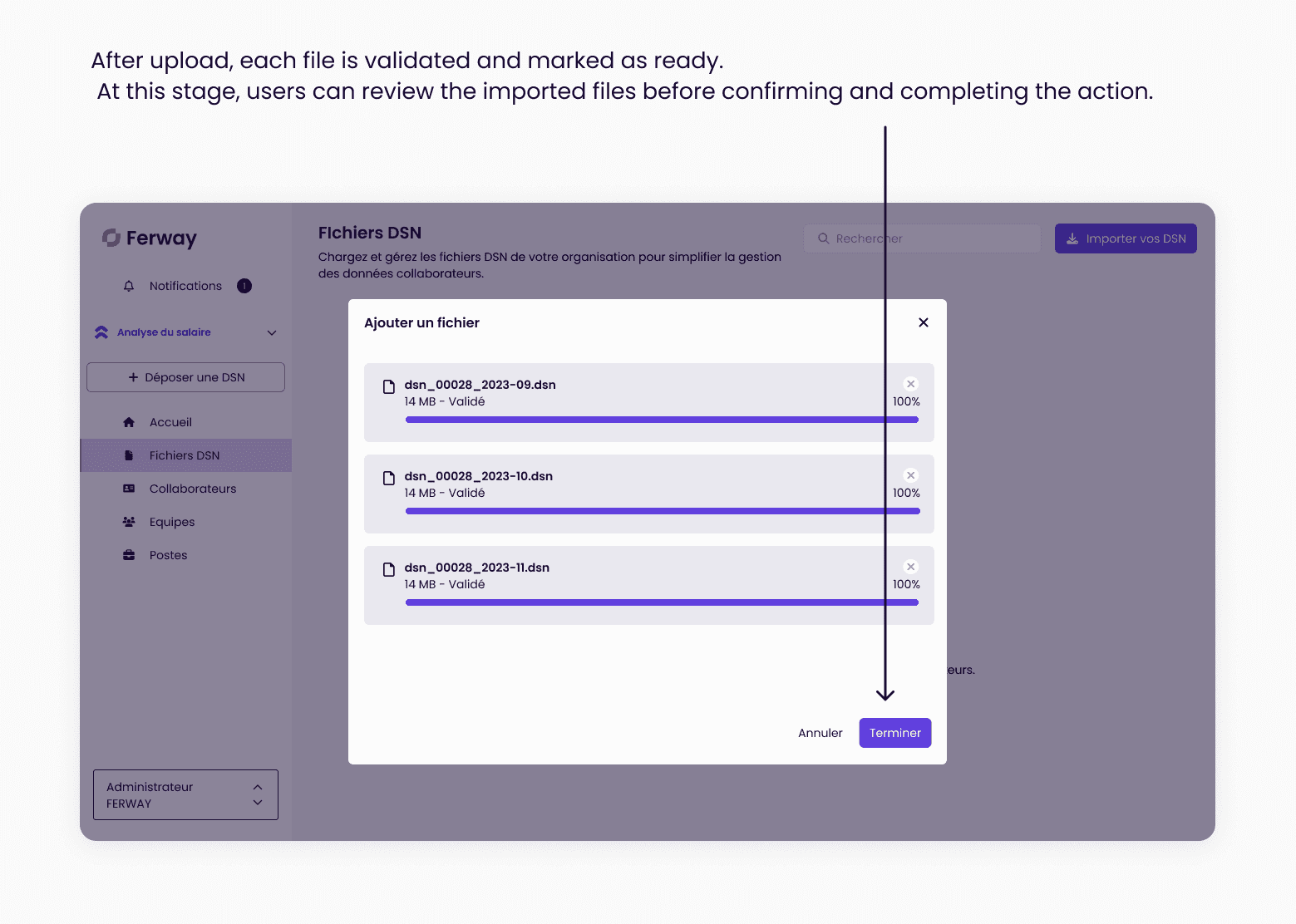
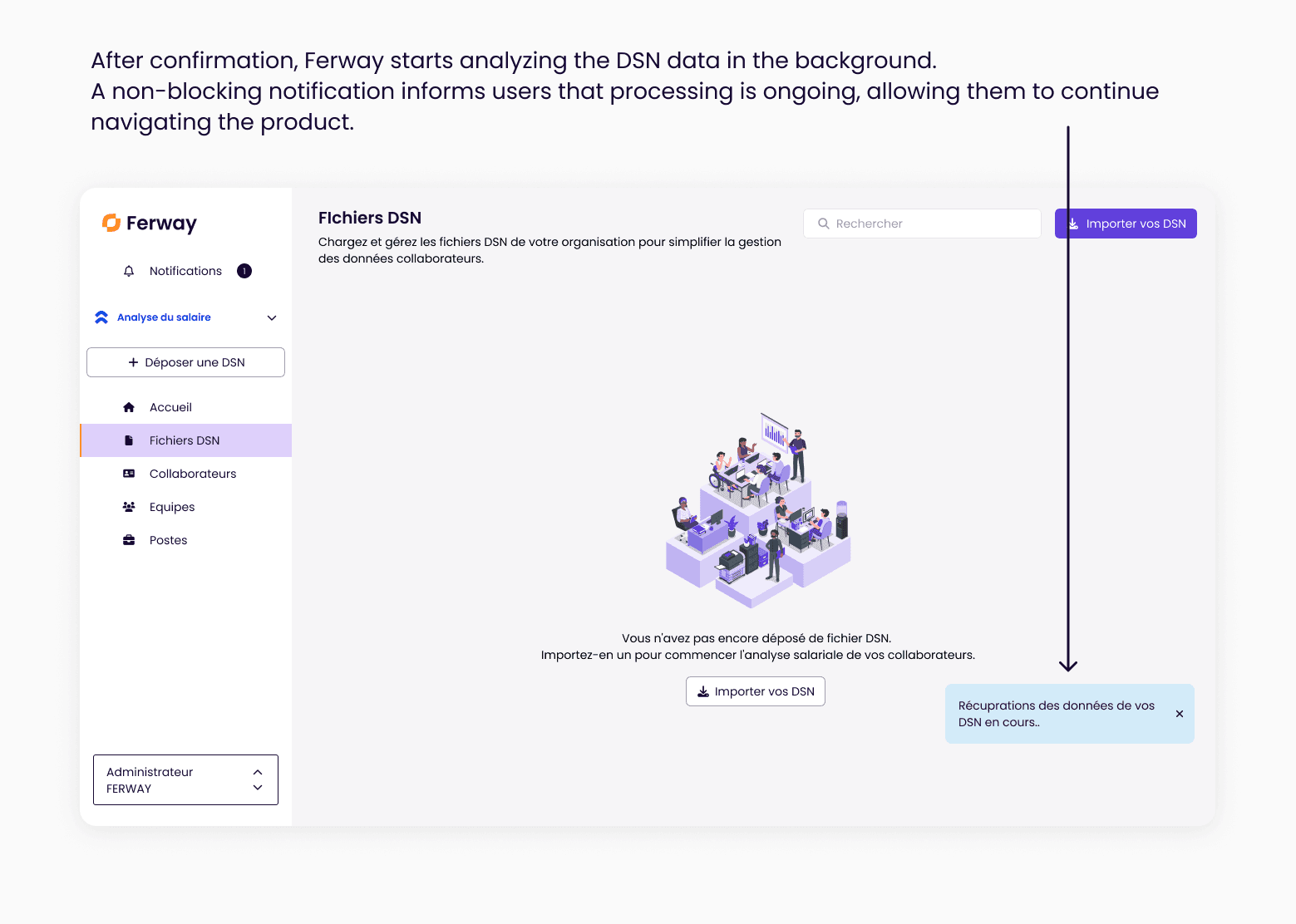
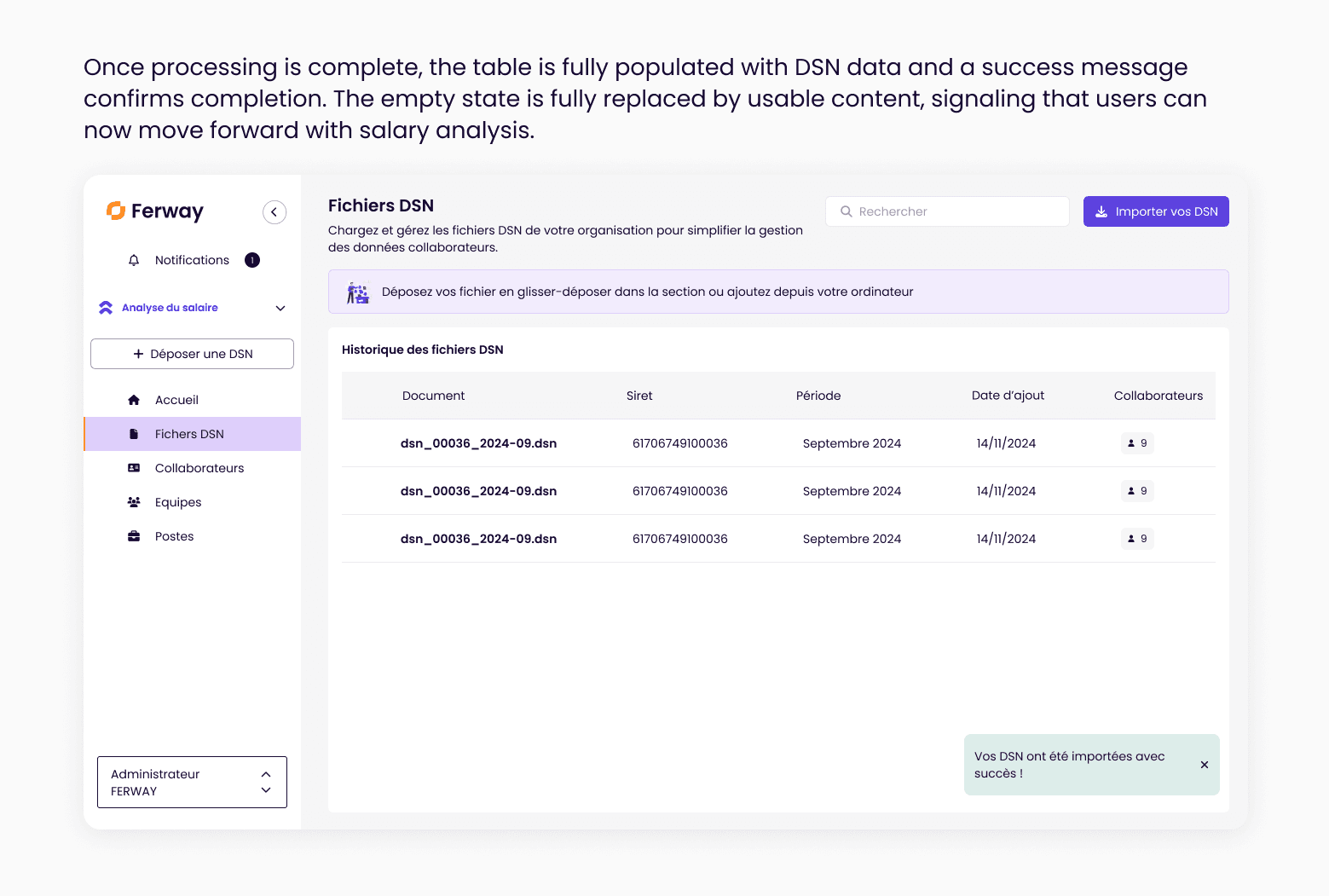
The first version of the DSN import flow focused on making bulk data import accessible and trustworthy, while keeping the experience understandable for non-technical users.
The flow was designed as a modal-based experience and included:
Outcome & limitations
The V1 flow successfully fulfilled its core purpose:
reducing manual effort by allowing bulk employee data import through DSN files.
However, early usage revealed several limitations:
The flow involved multiple modal states, adding friction
Processing feedback could feel slow or unclear
The experience prioritized robustness over speed and simplicity
These observations led to a second iteration focused on streamlining the flow, reducing friction, and improving perceived performance, resulting in a redesigned V2.
Solution — Second version (V2)
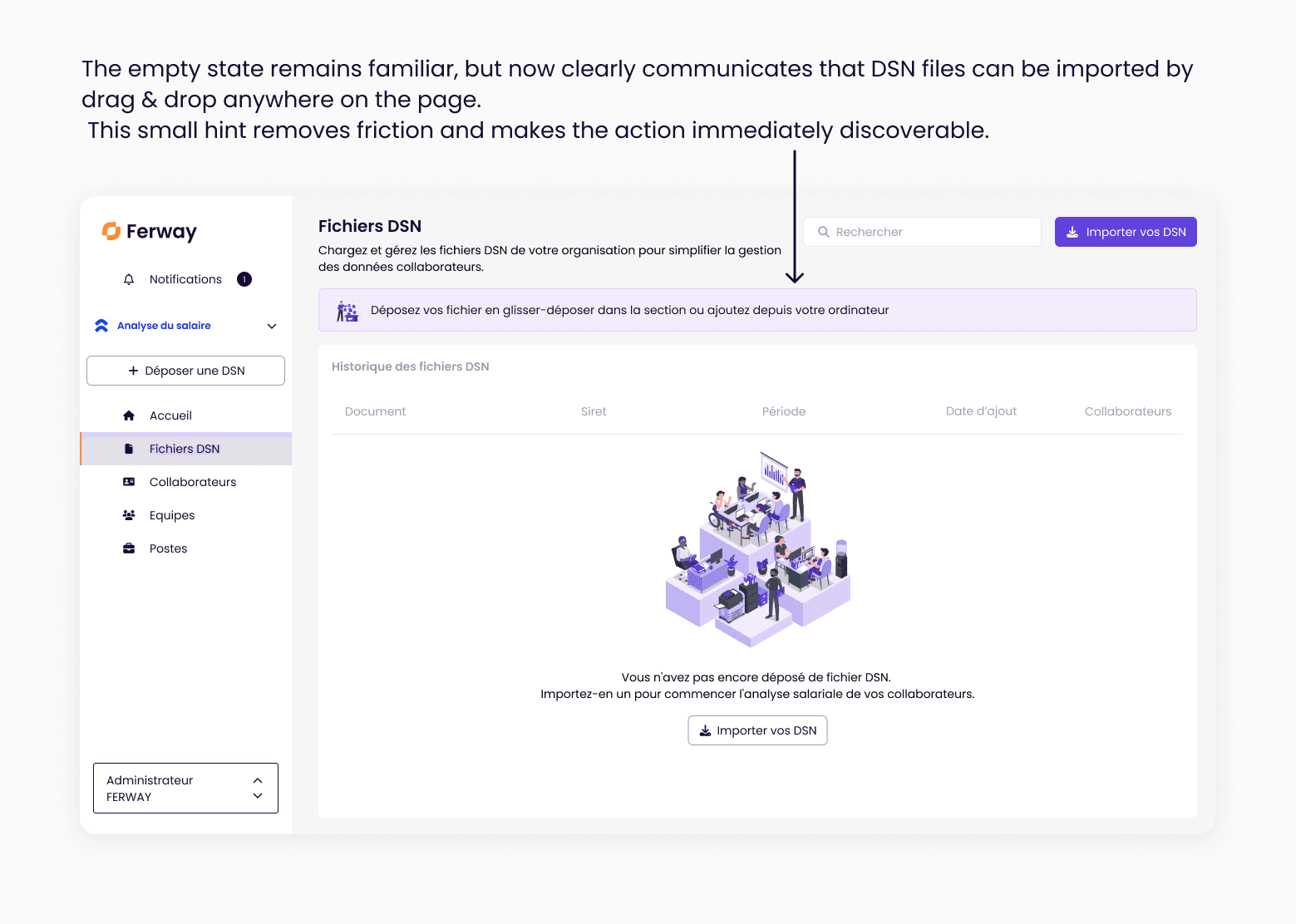
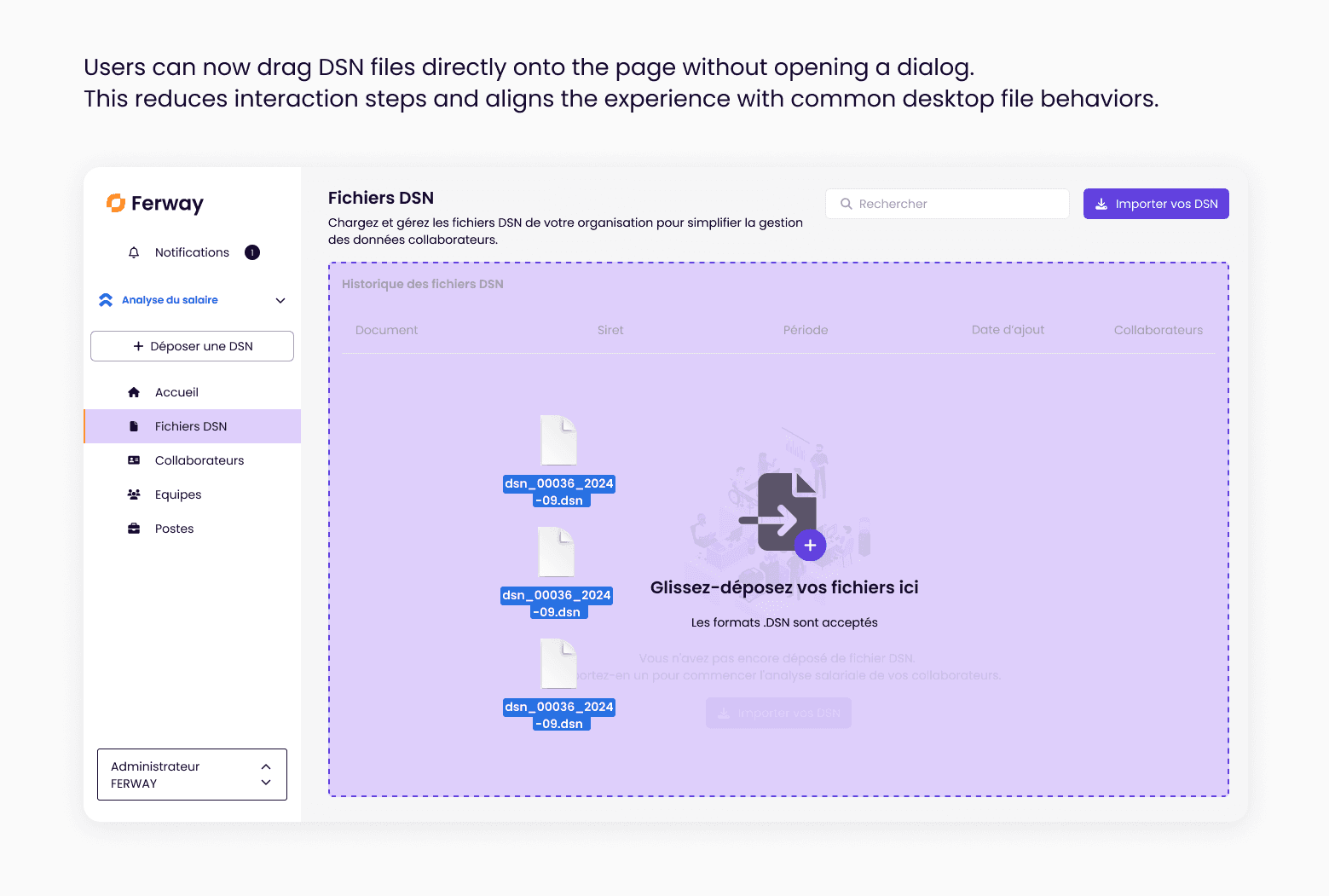
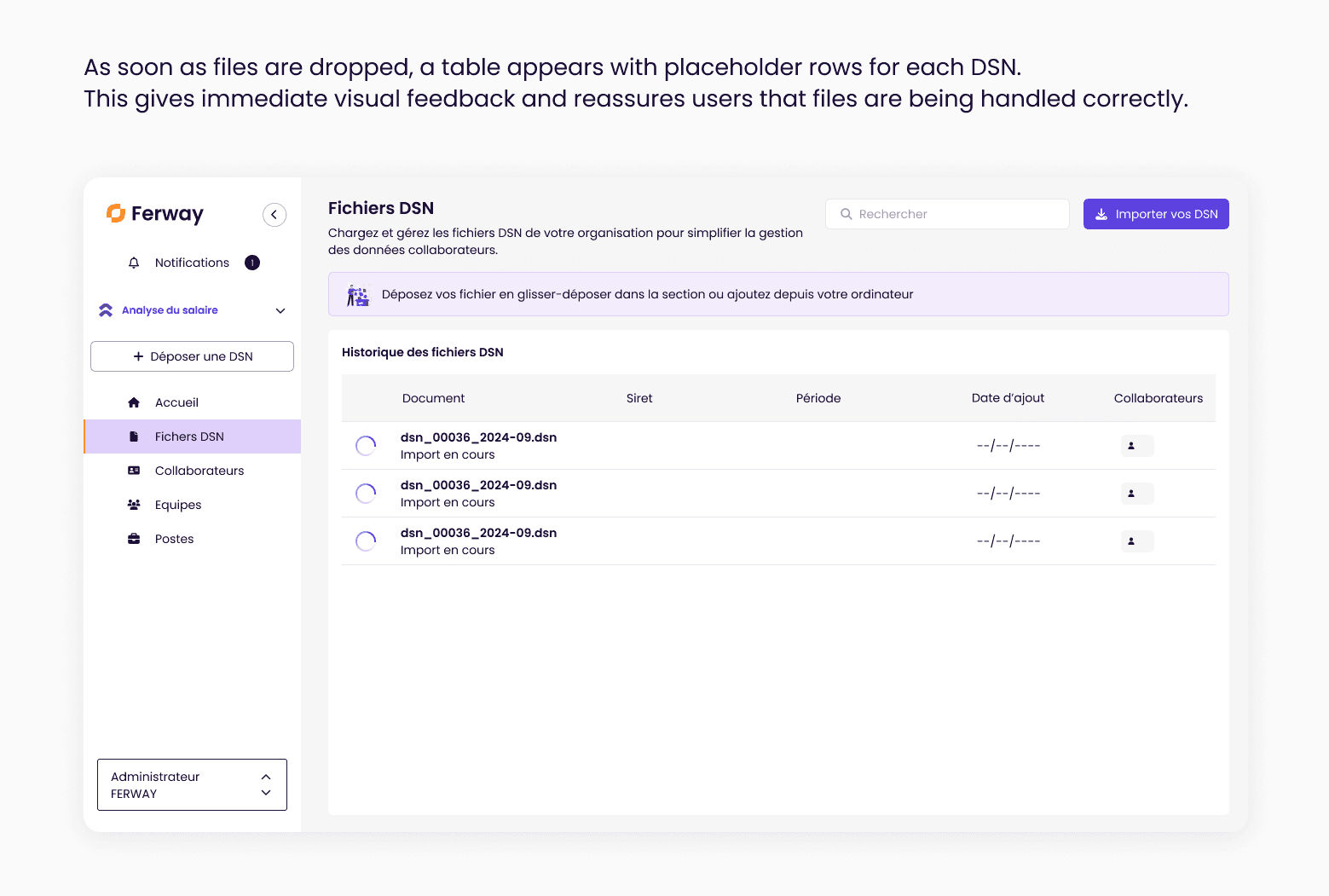
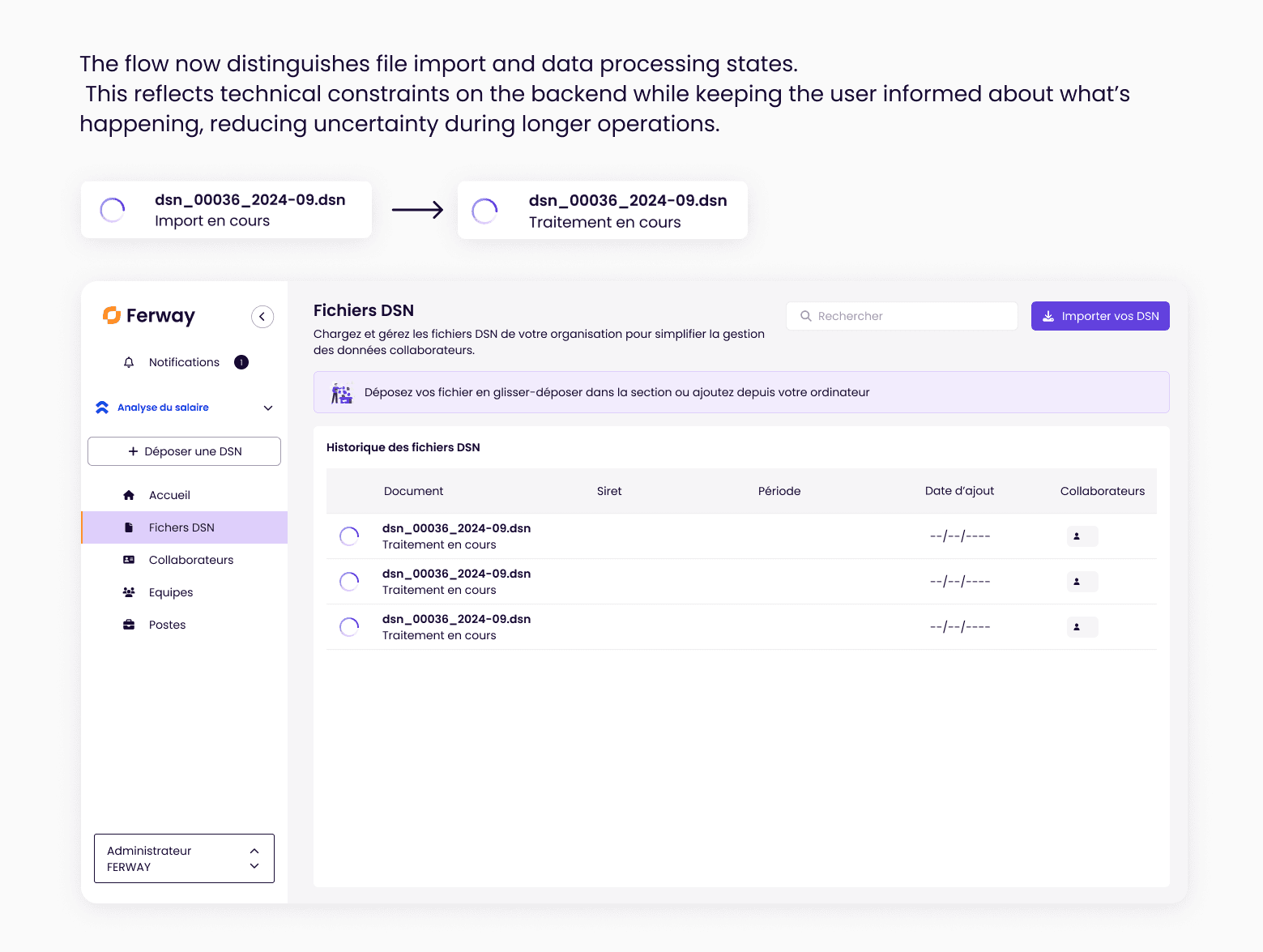
The DSN import flow was redesigned to reduce friction and better reflect the system’s technical behavior, making file upload faster, clearer, and more intuitive :
Why this V2 works better ?
Fewer steps, no modal friction
Clear system feedback at every stage
Better alignment with technical realities
Faster perceived performance and higher confidence
Project 2 — Job matching for reliable market comparisons
Problem
As companies grow, job titles become increasingly inconsistent.
Similar roles can be named differently across teams, making salary analysis unreliable.
For Ferway, this created several challenges:
Company job titles were too heterogeneous to be analyzed directly
Manual job mapping was time-consuming and error-prone
Users didn’t always understand which Ferway role to select
Incorrect mappings led to inaccurate salary benchmarks
As a result, users struggled to fully leverage Ferway’s market analysis capabilities.
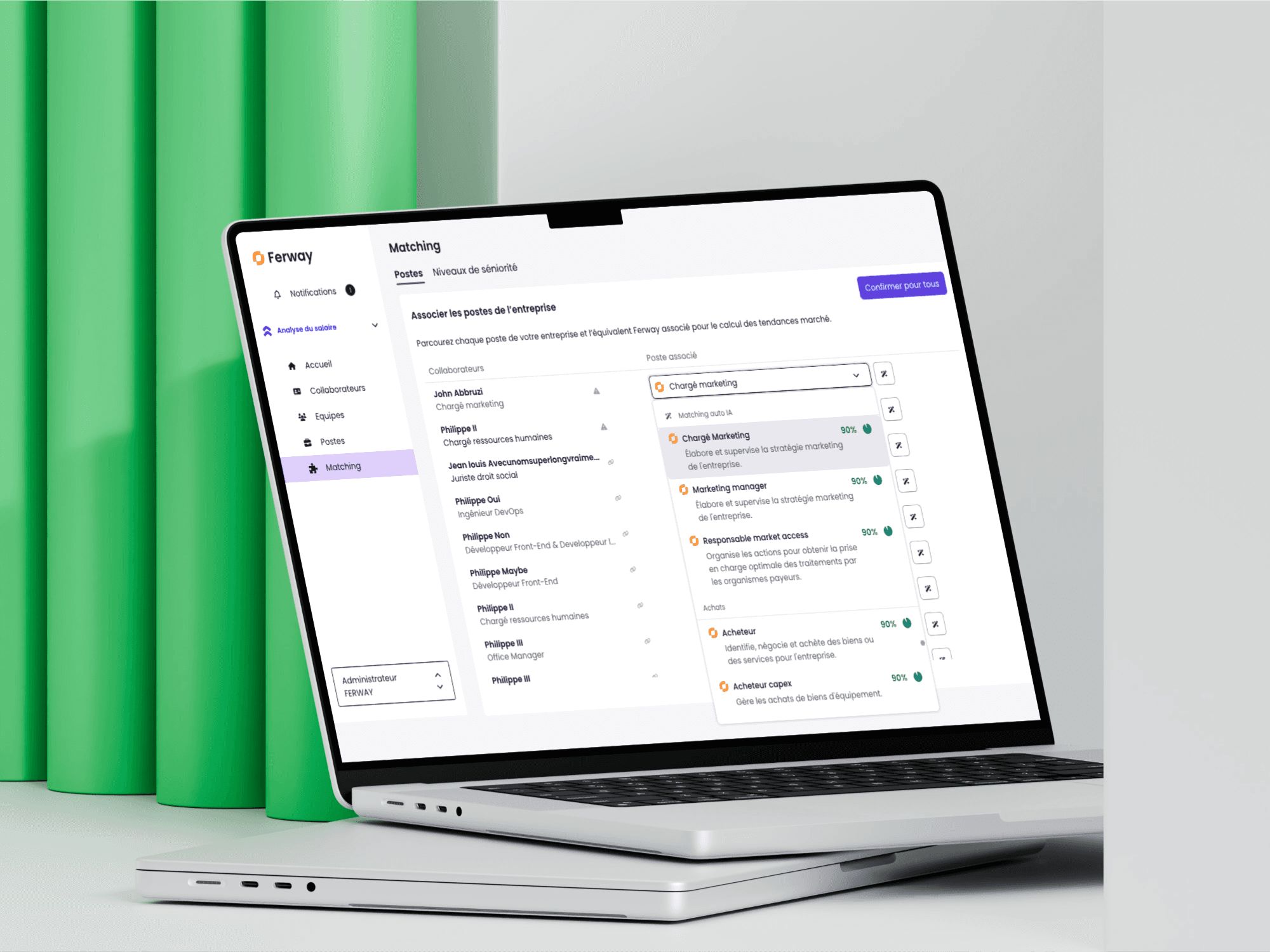
Solution
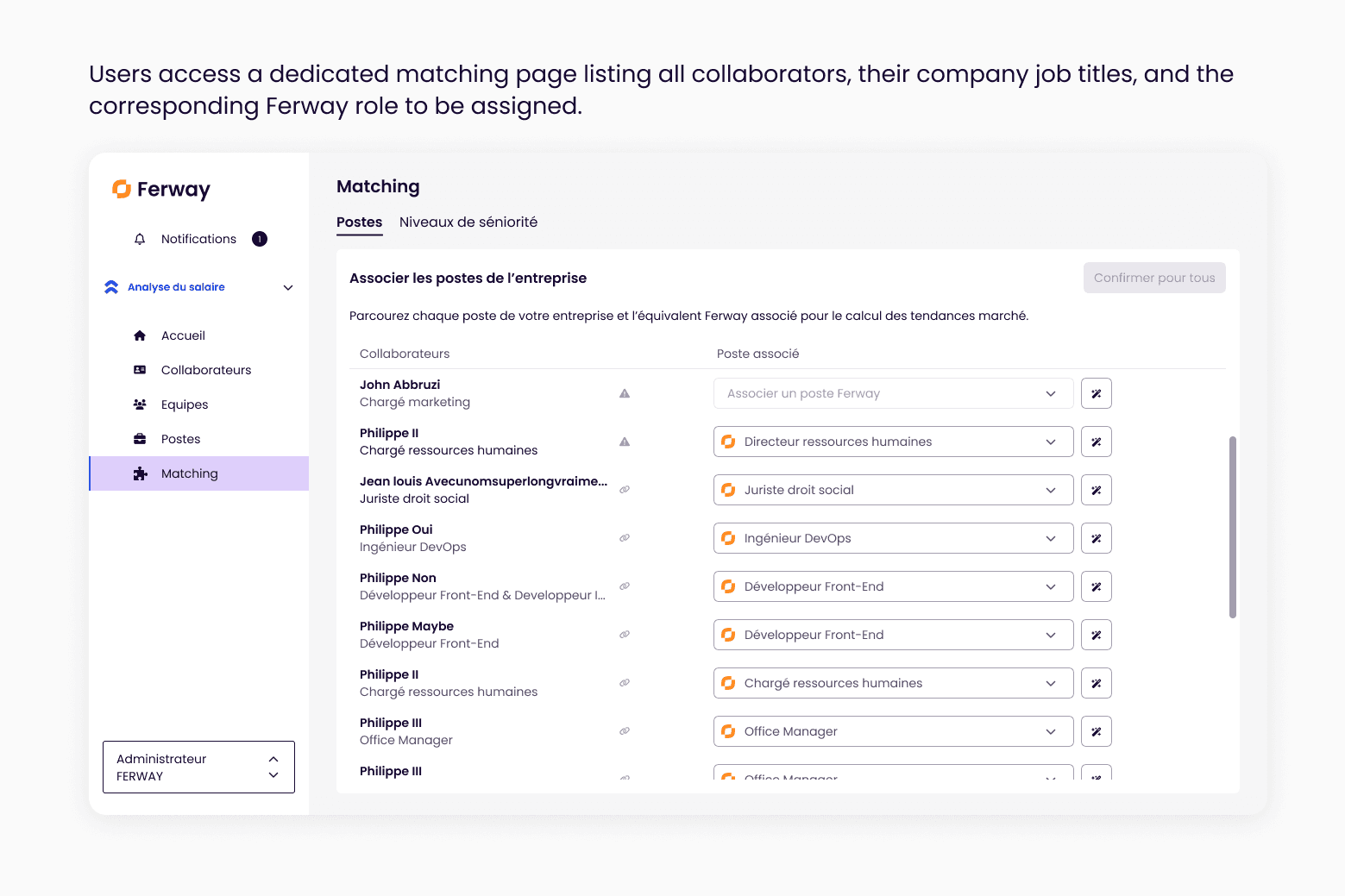
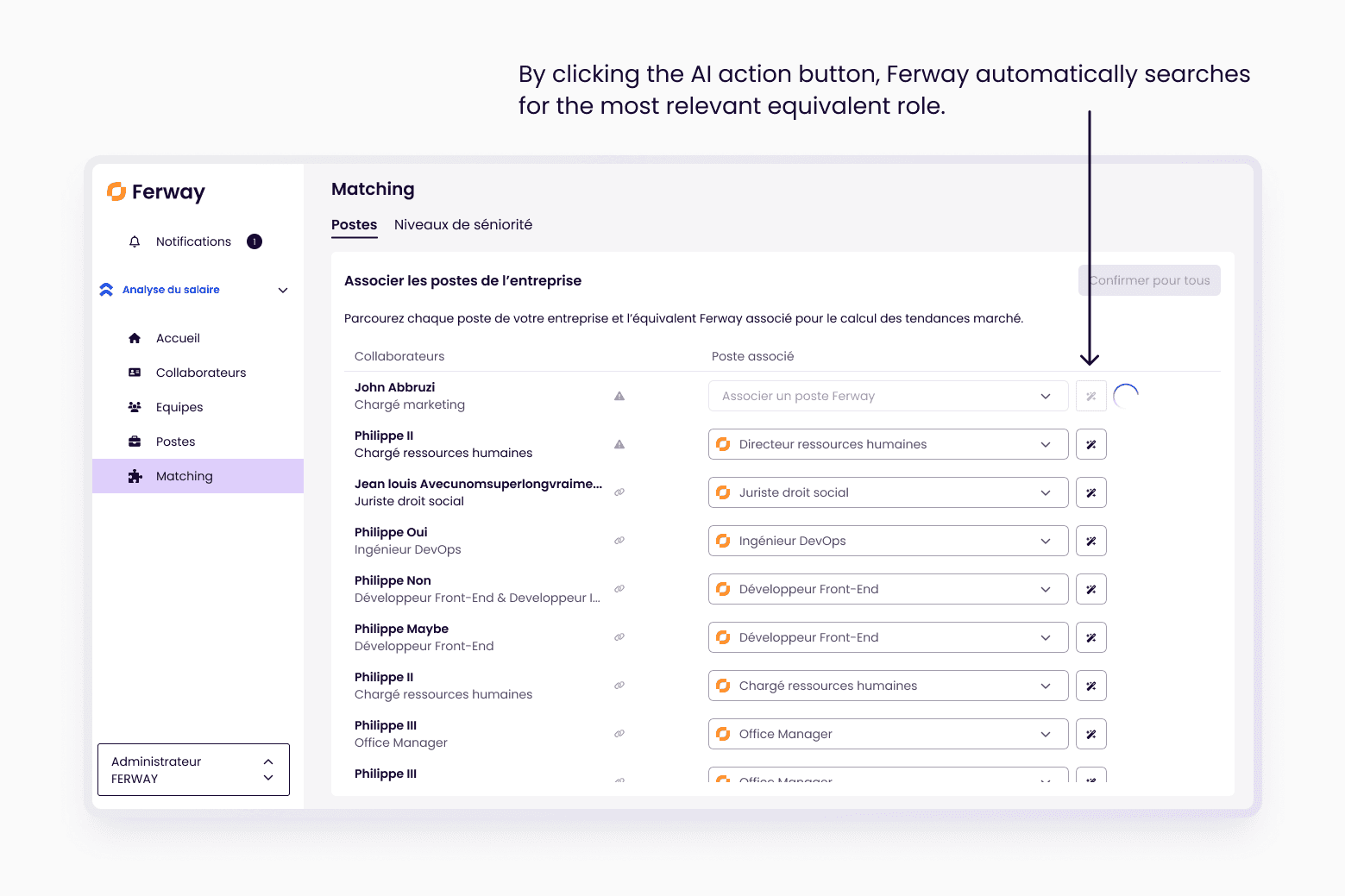
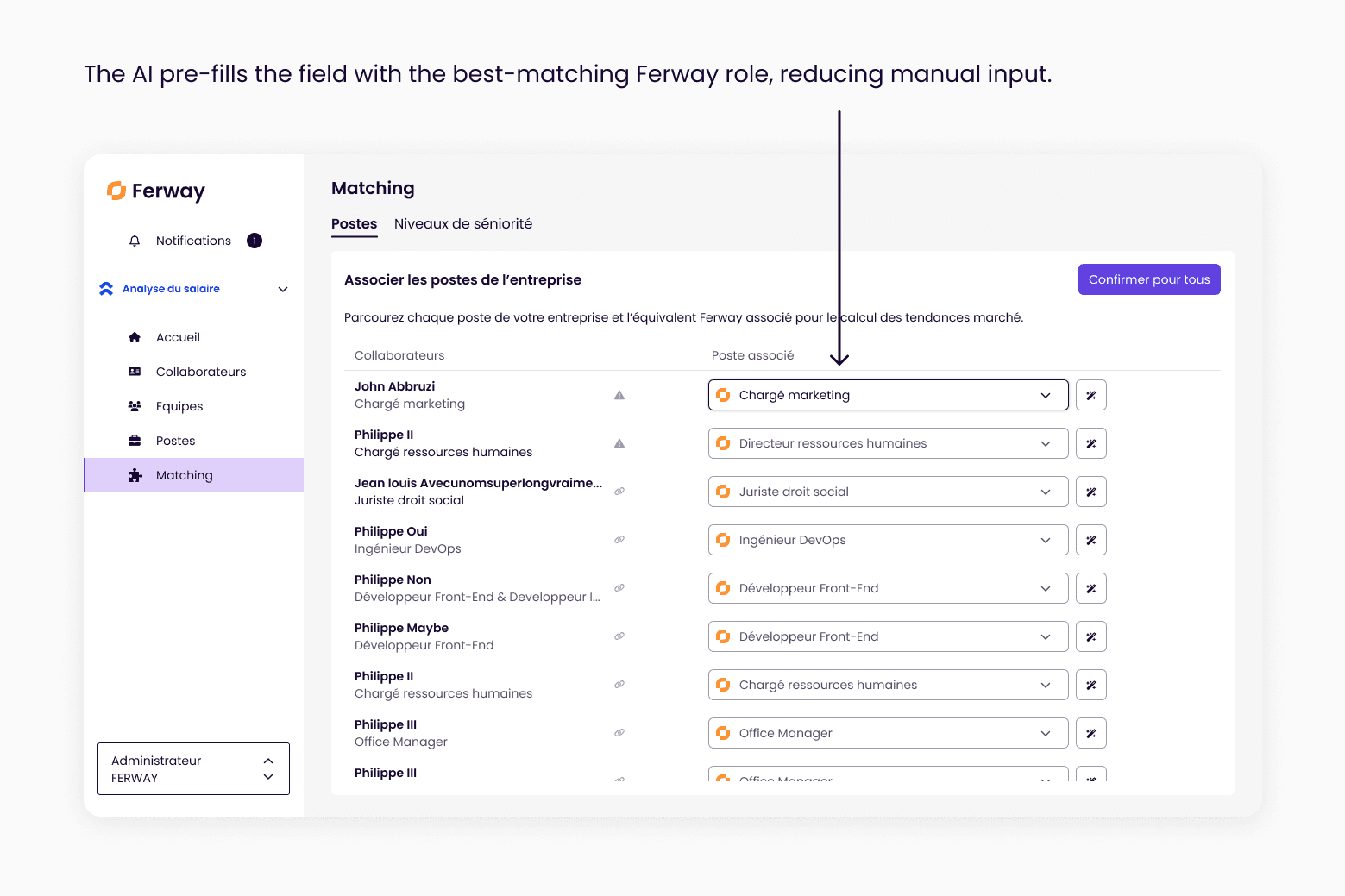
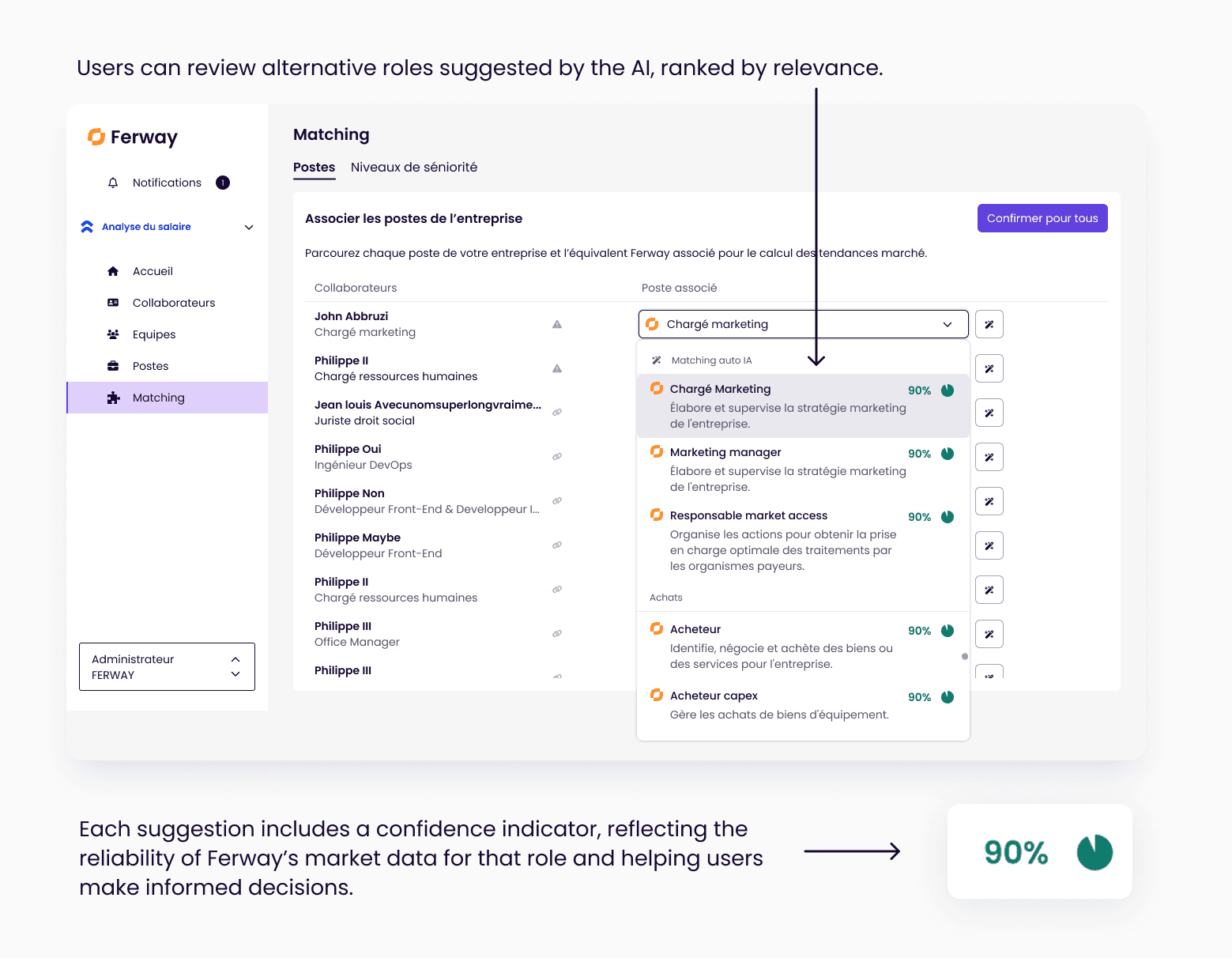
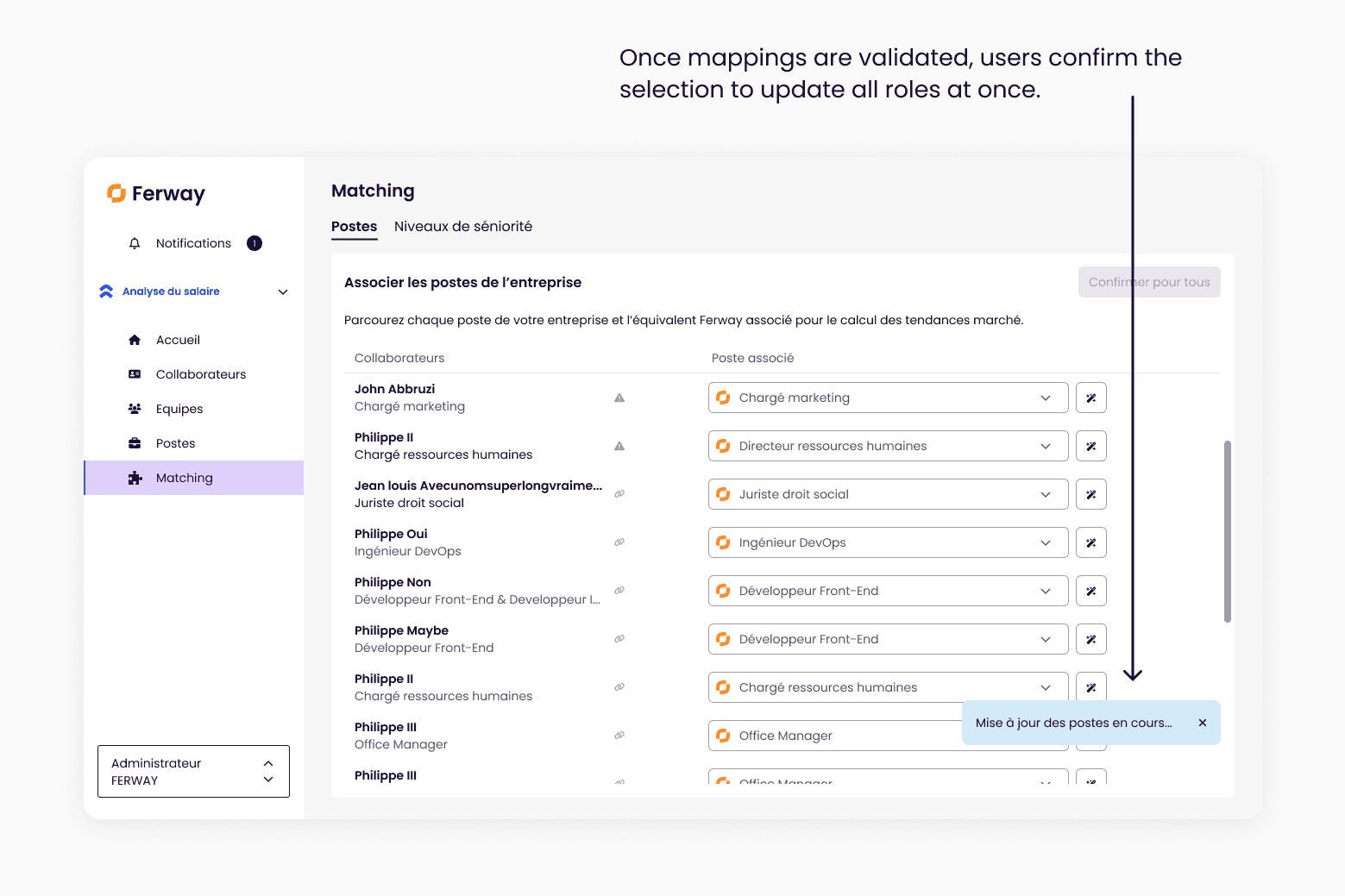
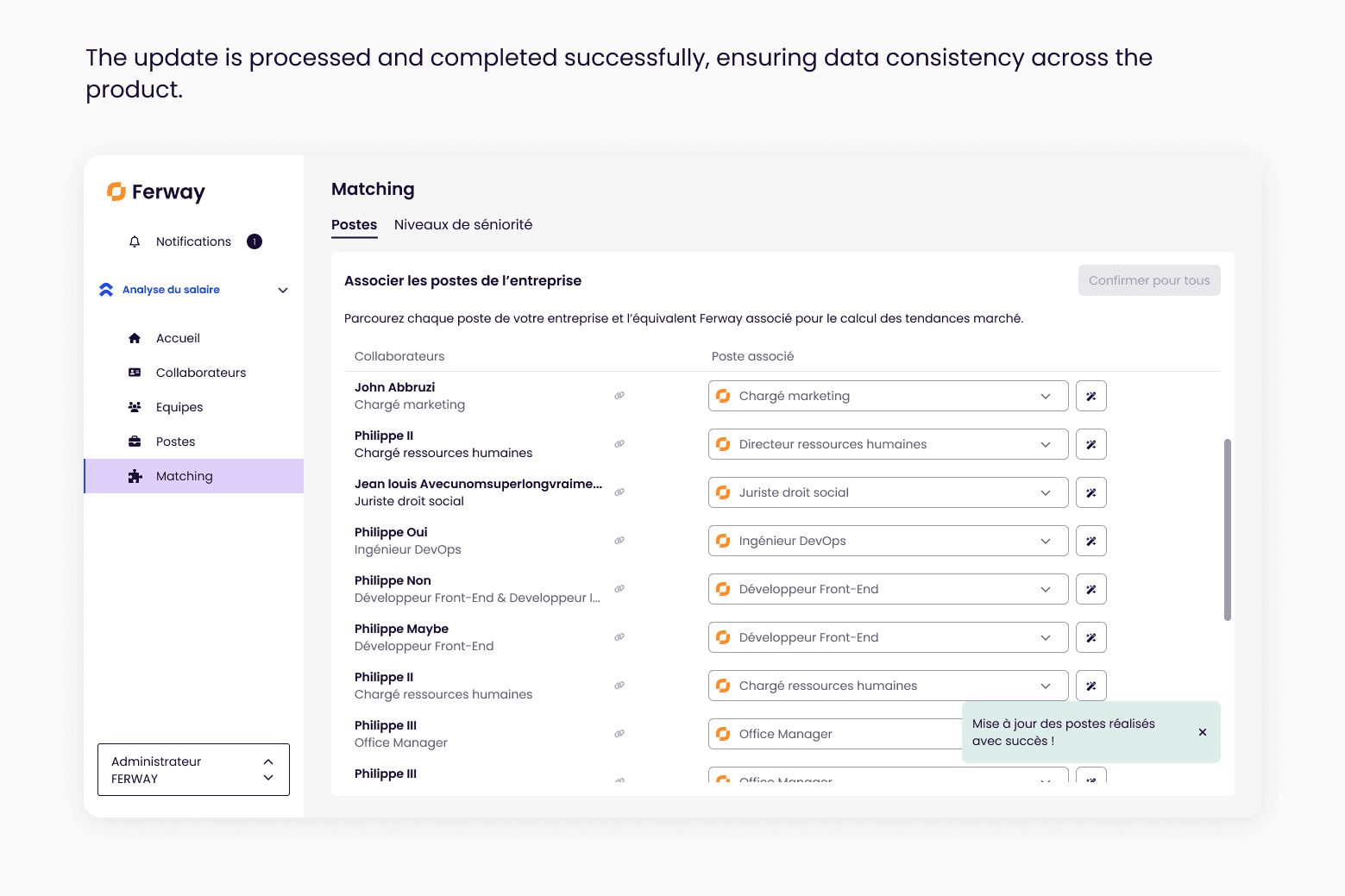
To solve this, I designed a dedicated matching flow that helps users associate their internal job titles with Ferway’s standardized roles, ensuring accurate salary analysis while reducing manual effort.
Impact & learnings
Impact
These two project improved how data is activated within Ferway, making salary analysis faster, more reliable, and easier to scale.
By simplifying DSN imports and standardizing job matching:
Users can populate employee data significantly faster than with manual input
Job titles are consistently aligned with Ferway’s market taxonomy
Salary insights become more accurate and comparable
Complex setup steps are easier to understand and complete
Key learnings
Raw data only creates value once it is properly structured and aligned
Automation should accelerate workflows without removing user control
Clear system feedback is essential in data-heavy experiences
Iteration is key when designing workflows with strong technical constraints
Trust and clarity matter more than speed in critical setup moments
Final reflection
This project highlighted the importance of designing data activation workflows, not just interfaces.
By focusing on clarity, progressive automation, and user confidence, complex HR data can be transformed into reliable and actionable insights, supporting both day-to-day operations and long-term product scalability.